Is SCIENCE!!!! still weird and cool in 2025? You betcha.

Welcome to Wondercafe2!

A community where we discuss, share, and have some fun together. Join today and become a part of it!

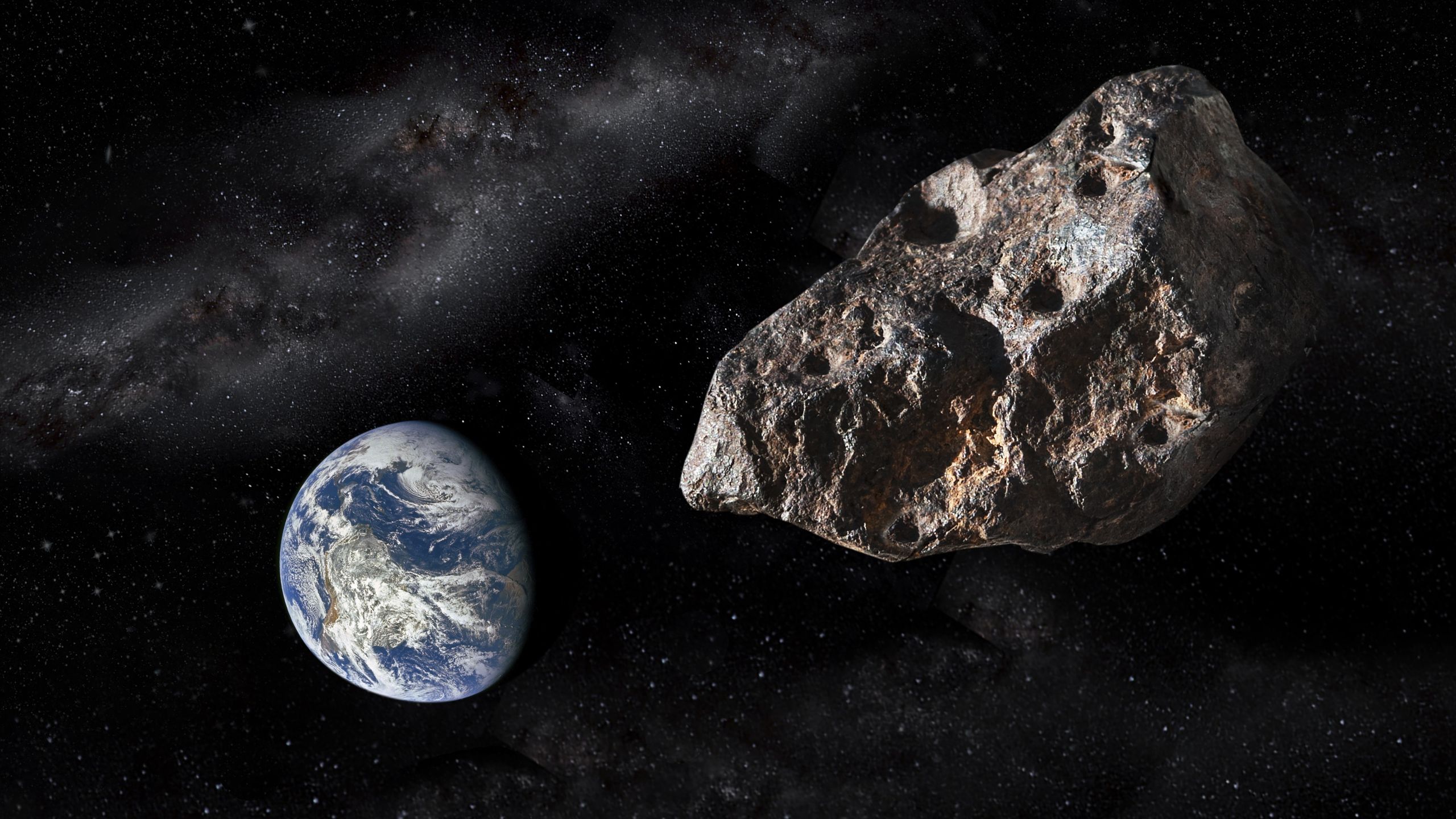
And the odds are now 1 in 38 after further observation. That's not a huge risk and could still change as we learn more. The size is also not 100% certain. It's based on brightness right now but the composition could skew that if it is something more or less reflective. Scientists have until April to study it so we could learn more. After that, it goes out of range until 2028.


But if it happens ... splat ... that may happen earlier due to Trumpian politics about putting all things down ... a sense of HU breeze ...


Gone with the wind, wayward?
 
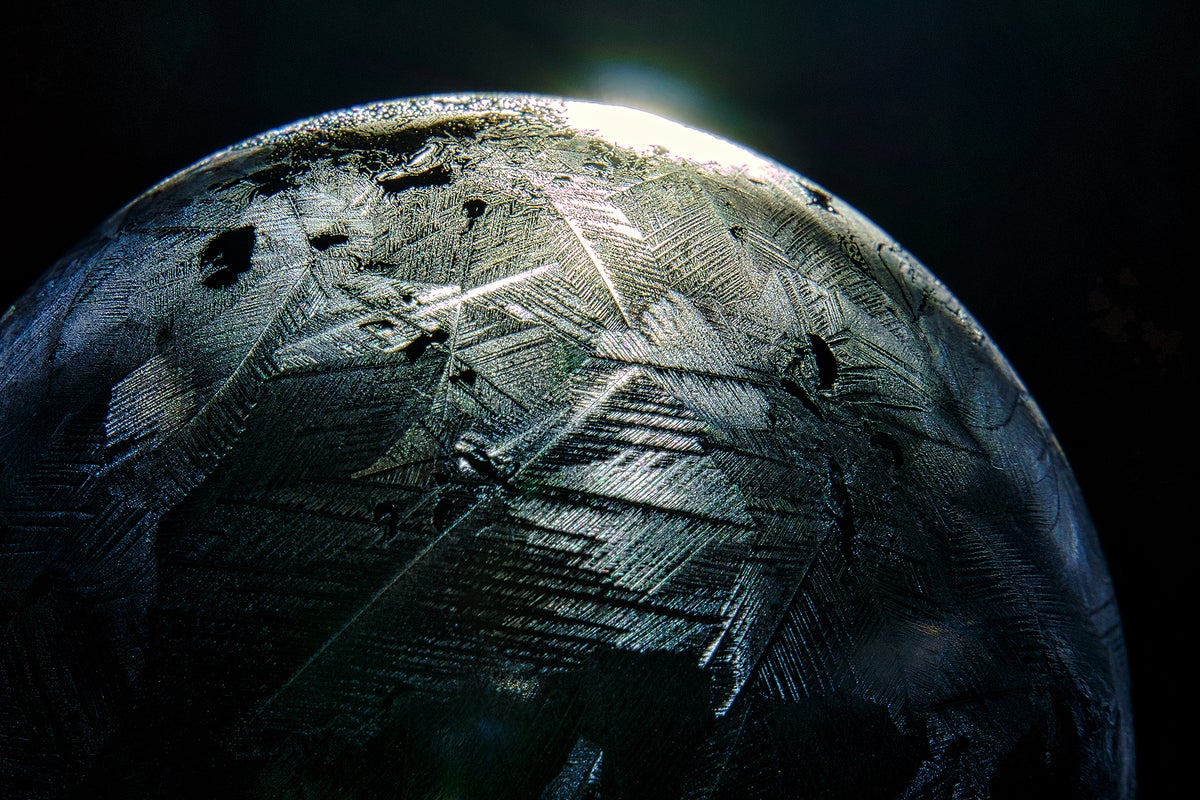
False vacuum decay is a doomsday scenario that has been kicking around the physics community for a while now. I've read about it in various places. It's a bit hard to explain, but essentially the theory is that the universe may not be in a "true vacuum" meaning it could spontaneously drop to a lower energy level. This would manifest as a bubble that would spread through the universe as we know it and annihilate the whole shebang, replacing it with a new one. That includes us. Fortunately, it appears to be (a) a remote possibility and (b) a long way off if it is a possibility. From Scientific American's Today in Science. I think this is not paywalled. At least, I could read it in InPrivate mode where I wasn't logged in to my subscriber account.

 
False vacuum decay is a doomsday scenario that has been kicking around the physics community for a while now. I've read about it in various places. It's a bit hard to explain, but essentially the theory is that the universe may not be in a "true vacuum" meaning it could spontaneously drop to a lower energy level. This would manifest as a bubble that would spread through the universe as we know it and annihilate the whole shebang, replacing it with a new one. That includes us. Fortunately, it appears to be (a) a remote possibility and (b) a long way off if it is a possibility. From Scientific American's Today in Science. I think this is not paywalled. At least, I could read it in InPrivate mode where I wasn't logged in to my subscriber account.

You might enjoy a book by Greg Egan called Schild's Ladder aboot an experiment that goes awry, causing the creation of a more stable vacuum that starts replacing our reality
 
False vacuum decay is a doomsday scenario that has been kicking around the physics community for a while now. I've read about it in various places. It's a bit hard to explain, but essentially the theory is that the universe may not be in a "true vacuum" meaning it could spontaneously drop to a lower energy level. This would manifest as a bubble that would spread through the universe as we know it and annihilate the whole shebang, replacing it with a new one. That includes us. Fortunately, it appears to be (a) a remote possibility and (b) a long way off if it is a possibility. From Scientific American's Today in Science. I think this is not paywalled. At least, I could read it in InPrivate mode where I wasn't logged in to my subscriber account.


This is not for mortals as first declared by Mort ... the alternate do not have the intelligence for it only the desire to know not ... thus nothing develops quickly causing expanding Rhodes and Rhome ... they grow thin and fragile ... like the bones of a story temporal construct? Yah ... its beyond me too but alas I did grasp that little bit ... nothing much but another Black Hole up there!
 
And it now looks like 2032 is ... going to be another boring, normal year. At least as far as asteroid strikes. The probability of impact by 2024 YR4 is now so low that NASA deems it "No Threat", or 0 on the scales used to measure these things. Good illustration of how science works (or should work) though. There was an initial hypothesis of a given risk after initial observations. Further observations tested that hypothesis by refining that risk, at first upwards but eventually downwards. Truth tested and refined by further observation. And, in this case, a lot of thanks go to Sir Isaac Newton since his law of gravity allows us to, once we have enough observations, calculate an object's orbit to a high degree of accuracy in order to determine if its orbit and Earth's might intersect to the detriment of both orbiting bodies.


Footnote: General relativity can do the job, too, but is generally only needed in high gravity fields, e.g. Mercury's orbit due to its close proximity to the sun.

 
And it now looks like 2032 is ... going to be another boring, normal year. At least as far as asteroid strikes. The probability of impact by 2024 YR4 is now so low that NASA deems it "No Threat", or 0 on the scales used to measure these things. Good illustration of how science works (or should work) though. There was an initial hypothesis of a given risk after initial observations. Further observations tested that hypothesis by refining that risk, at first upwards but eventually downwards. Truth tested and refined by further observation. And, in this case, a lot of thanks go to Sir Isaac Newton since his law of gravity allows us to, once we have enough observations, calculate an object's orbit to a high degree of accuracy in order to determine if its orbit and Earth's might intersect to the detriment of both orbiting bodies.


Footnote: General relativity can do the job, too, but is generally only needed in high gravity fields, e.g. Mercury's orbit due to its close proximity to the sun.


What really do we know for sure what the powers will drop on us by folly ... given what the powers know as per their attitude to dismiss intelligence ... so thought departs ... and nobody took note! Did you see that flash ...
 
And it now looks like 2032 is ... going to be another boring, normal year. At least as far as asteroid strikes. The probability of impact by 2024 YR4 is now so low that NASA deems it "No Threat", or 0 on the scales used to measure these things. Good illustration of how science works (or should work) though. There was an initial hypothesis of a given risk after initial observations. Further observations tested that hypothesis by refining that risk, at first upwards but eventually downwards. Truth tested and refined by further observation. And, in this case, a lot of thanks go to Sir Isaac Newton since his law of gravity allows us to, once we have enough observations, calculate an object's orbit to a high degree of accuracy in order to determine if its orbit and Earth's might intersect to the detriment of both orbiting bodies.


Footnote: General relativity can do the job, too, but is generally only needed in high gravity fields, e.g. Mercury's orbit due to its close proximity to the sun.
That took no time at all

But in Media time, too long lol

Thanks, Ape!
 
461ee97113e202debb594f905886eba4.jpg
From Warren Ellis' fine book, Planetary, aboot a group of Archeologists of the Strange, digging into the obruscated myths of their world
 
Back
Top