Invisibility and institutions

Welcome to Wondercafe2!

A community where we discuss, share, and have some fun together. Join today and become a part of it!

And that's just it, decisions should be based on individual's circumstances.
Should or shouldn’t? As far as I’m concerned allowing somebody who is dying but wants to live to be killed by the state system because of lack of support - support only available through private paid for system they can’t afford - is not only wrong it’s dangerous to the public good. And if she was forced into that position with perhaps months to live, what about those with who aren’t dying, with years to live? Anybody who thinks it’s ok is supporting fascism. It’s social conditioning shaping public attitude about disability and public policy - not just a debate about personal choice.
 
Last edited:
If it becomes normalized for people who want to live to choose maid out of desperation we’re irreparably screwed as a society.

And if they included “disability” in the wording of the law, who might they come after next to “include” down the road? Hello… this is necessary to consider.
 
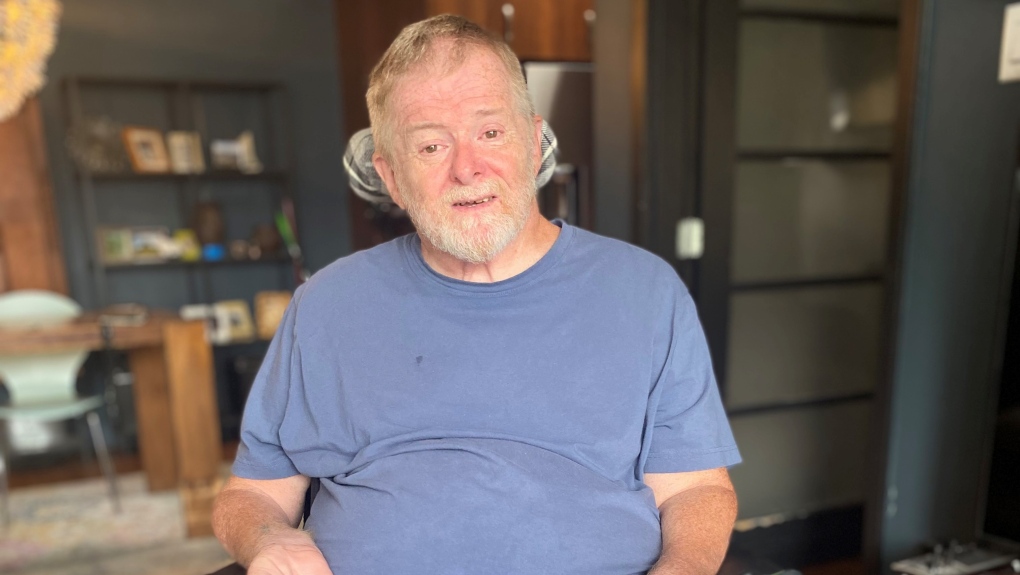
I didn’t know which thread was best for this. It’s about someone who received MAiD recently who had lived with ALS - which runs in her family. She made clear before her death that she was doing it due to lack of support - otherwise she had life left in her and wanted to live longer. She needed more home care hours at home, not to move to a care facility. She was sad to be “choosing” MAiD, her friends were sad. It’s a heartbreaking story.

It’s so wrong that our society thinks MAiD is an adequate replacement for care.

She had almost 8 hrs a day of home care. That’s an amount people in other areas / provinces most likely would not even get, simply because of the lack of staff. And the lack of staff isn’t because there are no jobs.
She had the option to move into a health centre. It sounds like she didn’t have private support that would make up for the rest of the 24 hours in a day.
The care was available, she just didn’t want the circumstances.
As a single , not rich person, I am very much aware that there might be the point, where I have to move into an institution. I think that people should be thinking about that in time the same way they make a will or a medical directive. Even if they have children or partners, they should be thinking about that- how much they would want to put onto the partner to look after them.
If there is only months left, the hospice is an option.
Expectations that everybody who needs 24/7 care could get it and stay at home without involving family members or other support persons and being staffed and paid for by government are unrealistic.
 
Expectations that everybody who needs 24/7 care could get it and stay at home without involving family members or other support persons and being staffed and paid for by government are unrealistic.
Yeah, I think we need better and more options for things like long term care and assisted living.
But we aren't even capable of giving the care people need in hospitals (ie. my mom being phoned to be a caregiver while my grandma was in hospital, that included things like medications).
I certainly think we can setup health care significantly. I don't really see how we can make public 24/7 care available in everyone's homes who wants that as an option available.
 
She had almost 8 hrs a day of home care. That’s an amount people in other areas / provinces most likely would not even get, simply because of the lack of staff. And the lack of staff isn’t because there are no jobs.
She had the option to move into a health centre. It sounds like she didn’t have private support that would make up for the rest of the 24 hours in a day.
The care was available, she just didn’t want the circumstances.
As a single , not rich person, I am very much aware that there might be the point, where I have to move into an institution. I think that people should be thinking about that in time the same way they make a will or a medical directive. Even if they have children or partners, they should be thinking about that- how much they would want to put onto the partner to look after them.
If there is only months left, the hospice is an option.
Expectations that everybody who needs 24/7 care could get it and stay at home without involving family members or other support persons and being staffed and paid for by government are unrealistic.
It’s not ok, though. It means, for disabled people that you’re not allowed to exist as part of society if you don’t have money. You’re not allowed to exist in your own home, even if you have few months/ years left. We are a wealthy country and this is a failure of capitalist greed. It is a failure of humanity, period. It should be just as important an imperative as saving the environment. To say that some human beings aren’t worth supporting to have a life with dignity based on inalienable characteristics and others are is callous, cruel, is the mindset of fascists. Hitler called them lives unworthy of life. Our mainstream society has fallen into that same trap and veiled it with words that make them feel better and not take the reality to heart. To take away all of someone’s personal autonomy and dignity because they are disabled or offer them death - so that society needn’t be burdened with them - is not a true choice. It is not compassionate. It comes from a very cruel attitude. People aren’t recognizing that. It’s as bad as saying if you are xyz gender or ethnicity you can do this dehumanizing half-life option and have no autonomy, or die. It’s like punishment for existing. It’s the same thing. Disabled people are just as much human beings as everybody else. To only give “useful” people options is an awful way to think. Besides being against international human rights treaties. But society has convinced itself its not awful.
 
Last edited:
We're talking as if there's only two options here: life completely independently in a private apartment with 24/7 care versus the hell that is currently much of long term care. Scandinavian countries and the Netherlands have much better options.
 
Yeah, I think we need better and more options for things like long term care and assisted living.
But we aren't even capable of giving the care people need in hospitals (ie. my mom being phoned to be a caregiver while my grandma was in hospital, that included things like medications).
I certainly think we can setup health care significantly. I don't really see how we can make public 24/7 care available in everyone's homes who wants that as an option available.
Where was the push to set up things to be significantly better, as an imperative, before MAiD was passed? The public didn’t care and it’s now so far down the slippery slope that it’s as far as I’m concerned - a genocidal public mindset. That’s the only word that fits making it ok for the system to kill people based on inalienable characteristics rather than include them to live in society with dignity. People are choosing death over collapsed conditions in care homes and palliative - then the imperative should’ve been to improve care homes and palliative care first before ever putting the law on the table. They didn’t, deliberately. And society overlooked it too. It’s far less likely to be turned around now.
 
We're talking as if there's only two options here: life completely independently in a private apartment with 24/7 care versus the hell that is currently much of long term care. Scandinavian countries and the Netherlands have much better options.
But we didn’t even improve care homes as an imperative before bringing in MAiD. And the will is not there. It’s gone so far it’s difficult to reverse.
 
Where was the push to set up things to be significantly better, as an imperative, before MAiD was passed? The public didn’t care and it’s now so far down the slippery slope that it’s as far as I’m concerned - a genocidal public mindset. That’s the only word that fits making it ok for the system to kill people based on inalienable characteristics rather than include them to live in society with dignity. People are choosing death over collapsed conditions in care homes and palliative - then the imperative should’ve been to improve care homes and palliative care first before ever putting the law on the table. They didn’t, deliberately. And society overlooked it too. It’s far less likely to be turned around now.
I really don't think MAID is related though. Can people who really want to avoid them get MAID, in some cases, yes. I just don't think it's a reasoning though. We allowed many to deteriorate at home before MAID, long term care had issues before MAID.
 
We're talking as if there's only two options here: life completely independently in a private apartment with 24/7 care versus the hell that is currently much of long term care. Scandinavian countries and the Netherlands have much better options.
You're probably thinking of Hogewey outside of Amsterdam for severe dementia. Some have travelled there from Canada to learn how to replicate the home. I think its brilliant.
Another alternative I can see that would promote independent living for seniors who dont want to live alone and may need daily check ins, might be to create a service that could coordinate groups living with 3 to 4 others in a house. ..where they could choose interaction or solitude on their own terms and still retain control over their life on their own terms. Sort of like the Golden Girls/Guys.... it could be like match.com only it's not a dating service, it would be like a change in lifestyle service, with an extensive questionnaire that would match living together friendships and compatabilities.
Anyway, that's an idea of mine.
 
I really don't think MAID is related though. Can people who really want to avoid them get MAID, in some cases, yes. I just don't think it's a reasoning though. We allowed many to deteriorate at home before MAID, long term care had issues before MAID.
It is. What I was trying to communicate is that it’s callous public policy to legalize assisted dying before making damn sure that the systems are set up for dignified living. And if they did that - people with disabilities would be living longer (which should be a given in an accessible and legitimately caring society). There would be no imperative to rush through MAiD and it’s expansion with poor consultation with disability rights experts who were unanimously opposed (disability rights are human rights). Disabled people (including terminally ill ones who want to live out their days) are a protected human rights group of people and a dignified life is a priority according to those rights - which are in the charter and internationally recognized - Canada signed the UNCRPD - but the govt flipped the priority upside down which was a breach of those rights and spun it as compassion so they didn’t have to invest in long term and palliative care as a first priority, nor things like accessible and affordable housing. They singled out disabled people to volunteer to “go” (death by attrition).Leaving disabled people who can’t afford to pay for private care and necessities backed into a corner with no imperative to change that. And the public mentality is so ableist they didn’t even notice or care that it was a human rights breach.

If they had improved access to good quality dignified care first lots of people would still be alive today and wouldn’t have given up. But the public now by in large believes that disabled people opting for MAiD is a compassionate way out of the suffering of disabled people - they have recoined deadly eugenics as a medical treatment for disability -caused by lack of care and broken systems, and affirmed for an already ableist mainstream public that the options disabled people have to live their lives matters less. If you replaced “disabled” with any other word to describe any other marginalized protected class it would be an outrage but it is by design that they want to get rid of disabled people by attrition to cut costs and have the public feel that not only is there nothing wrong with that, but that’s it’s a good thing. It’s easy to get the public to affirm that our lived lives don’t matter because they already feel that way on a subconscious level - and that is how this policy was allowed to happen underhandedly, and expand.
 
Last edited:
It is. What I was trying to communicate is that it’s callous public policy to legalize assisted dying before making damn sure that the systems are set up for dignified living. And if they did that - people with disabilities would be living longer (which should be a given in an accessible and legitimately caring society). There would be no imperative to rush through MAiD and it’s expansion with poor consultation with disability rights experts who were unanimously opposed (disability rights are human rights). Disabled people (including terminally ill ones who want to live out their days) are a protected human rights group of people and a dignified life is a priority according to those rights - which are in the charter and internationally recognized - Canada signed the UNCRPD - but the govt flipped the priority upside down which was a breach of those rights and spun it as compassion so they didn’t have to invest in long term and palliative care as a first priority, nor things like accessible and affordable housing. They singled out disabled people to volunteer to “go” (death by attrition).Leaving disabled people who can’t afford to pay for private care and necessities backed into a corner with no imperative to change that. And the public mentality is so ableist they didn’t even notice or care that it was a human rights breach.

If they had improved access to good quality dignified care first lots of people would still be alive today and wouldn’t have given up. But the public now by in large believes that disabled people opting for MAiD is a compassionate way out of the suffering of disabled people - they have recoined deadly eugenics as a medical treatment for disability -caused by lack of care and broken systems, and affirmed for an already ableist mainstream public that the options disabled people have to live their lives matters less. If you replaced “disabled” with any other word to describe any other marginalized protected class it would be an outrage but it is by design that they want to get rid of disabled people by attrition to cut costs and have the public feel that not only is there nothing wrong with that, but that’s it’s a good thing. It’s easy to get the public to affirm that our lived lives don’t matter because they already feel that way on a subconscious level - and that is how this policy was allowed to happen underhandedly, and expand.
Also, the benchmark case for C7 expansion in Quebec lower court, involved one of two parties - a man with cerebral palsy named Jean Truchon who was 51. He could not afford home care so he said he wanted MAiD rather than live in the miserable conditions of a provincially run nursing home. He was in exactly the predicament @ChemGal is arguing is not common. But the euthenasia lobby and their shrewd lawyers knew full well it was common for people to be backed into a corner like that. More common than not, considering that disabled people are statistically far more likely to be poor - that’s why they used him as one of the two parties. They certainly didn’t go into it without knowing that - nobody can be naive enough to believe that expensive lawyers for a landmark case for the most expansive assisted dying law in the world would not know that and know exactly who they were using to represent the case and how they would present it.

The other party was Nicole Gladu, a woman with post polio syndrome from a well off and educated background who had a nice home and all the supports she needed. She wanted the option to have medically assisted suicide at the time of her choosing.

It was previously establishd with the earlier Bill C14 - that suicide is legal and disabled people can’t do it themselves so they made it a human rights imperative that disabled people were not excluded from their freedom to commit suicide. But, this was, they said seven years ago, about including terminally ill people to have this right, on the same as non disabled terminally ill people. There were to be safeguards to protect disabled people who were not terminally ill on the same basis as there are safeguards to protect non disabled people who are not terminally ill. It was still a crime for doctors to facilitate the death of someone who was not dying, and an ethical imperative to provide suicide intervention.

So, (skipping over the lack of oversight and problematic cases not being reviewed for negligence in the Bill C14 period of time since MAiD became legally applicable), fast forward to Bill C7. Nicole Gladu was not dying but she was to be a relatable legal example for expanding the law to “include” disabled people generally. A priveleged, well dressed, well off, educated, retired career woman in her 70’s who always knew what she wanted for herself and seemed in control of her own choices. That was her image. Truchon’s image was of someone in an unenviable position to be pitied, and released from a horrible predicament that nobody wants. (In thinking about it - I think they made deliberate choices in representatives - they were careful to include two white people and to choose a woman to be making the more ‘liberated’ choice.)

Since the case was won by using both parties as examples - it set a legal precedent for it to be okay to choose MAiD due to a broken system and lack of adequate supports. We can’t say it wasn’t intended or deliberate. Already, several cases have been reported in the news of just that scenario. And those are only the ones who came forward. It cannot be dismissed as a few people choosing it for those reasons without recognizing that those few people were people who were failed by the system and killed by the state - because the state allowed that precedent to be set and for it to be normalized.

The AG after Jody Wilson Raybould (who argued for strong safeguards and was hesitant about expansion) was fired for calling out federal government corruption involving Quebec - is David Lametti, from Quebec. He refused to challenge Bill C7 in the Supreme Court claiming that the suffering of disabled people was too great to tie it up in the Supreme Court, but has not said a word in relation, about the conditions of care homes and the failed systems leading people like Truchon to choose MAiD. They have done an economic cost benefit analysis on this. It’s callous and underhanded.

 
Last edited:
I forgot to add - they whitewashed the whole suicide factor because it doesn’t fit with the compassion and “medical treatment” option narrative that is more palatable and helps people ignore that our right to intervention by our health care providers, on the same basis as others, has been erased. Changed from “physician assisted suicide” to “medical assistance in dying”. They also expanded on who could assist by changing “physician” to “medical” - medical is more ambiguous allowing nurse practitioners and others to facilitate deaths once people have been approved for, as it’s now called, “treatment”. It’s a friggen nightmare. Shady political plays of the worst kind.
 
Last edited:
I wish more people would believe me by now that this law should be stopped and the true internationally recognized human rights of disabled people reinstated and supported. We’ve been systemically abandoned and dehumanized… not to mention there are thousands of people traumatized by the expansion of the law to “include” us. We’re real people. We’re no strangers to being abused and neglected by the system and discriminated against everyday. This is more than many can bear - while already dealing with enough - and is impacting the ability to fight this. The people most negatively impacted have no resources. The government knows this. They are counting on “attrition” by us and the public viewing their role as compassionate to normalize us giving up. It’s not compassionate.

Expansion to mentally ill people is set to go ahead in March 2023, and the expansion discussion has now moved on to include “mature minors” - disabled and mentally ill minors are extremely vulnerable to coercion by adults in their lives, and messaging from their peers.
 
Last edited:
More system failures leading people who are not dying, who want to live if proper supports weren’t so rapidly falling apart - to apply for MAiD, in Quebec. And just a reminder that AG Lametti from QB said it could go not to Supreme Court to be challenged because disabled people would suffer too much (waiting to die from lack of care is what they would suffer from but he has a responsibility to address that).

 
Last edited:
More on Sathya from Winnipeg.


The page may be blurred out but I was able to sign up with my email to read for free.
 
I Believe it was Margaret Mead that said the first signs of civil society constructs was evidence of a cave woman having survived with a broken leg that healed. She assumed that someone cared for her while unhealthy ... thus the conclusion that compassion evolved.

When the financial margins and interest thereof get to be primary ... something is trimmed out! Thus compassion goes ...

Someone stated it may be related to humility and justice ... but these margins appear to be trimmed out also! Recall that the main thing is eco-nom-ism and not folk ... folk is out! There may be a point of turn about that is beyond us as an OBI (objective perspective)? Whoa ... that's out there ... almost like binary code! Double stringers ... OSH-eicht ... I weren't to say that!
 
You're probably thinking of Hogewey outside of Amsterdam for severe dementia. Some have travelled there from Canada to learn how to replicate the home. I think its brilliant.
Another alternative I can see that would promote independent living for seniors who dont want to live alone and may need daily check ins, might be to create a service that could coordinate groups living with 3 to 4 others in a house. ..where they could choose interaction or solitude on their own terms and still retain control over their life on their own terms. Sort of like the Golden Girls/Guys.... it could be like match.com only it's not a dating service, it would be like a change in lifestyle service, with an extensive questionnaire that would match living together friendships and compatabilities.
Anyway, that's an idea of mine.
Hey Waterfall - somewhere recently I heard this brilliant idea - what if (and huge WHAT!) all new multi-unit buildings were required to build in 4 accessible suites on their ground floor, with an adjacent unit for a caregiver to provide service to all of them. Provision of care, community living. Don't ask who would fund the caregiver - it was posited that perhaps the occupants of the units would supplement whatever gov paid - but that was just one of those 'blue sky thinking' ideas! Seemed inspired to me tho.
 
There are hungry children in schools, people unable to afford medications they need, crumbling infrastructure, huge environmental challenges, and tens of thousands of people disabled by age with poor living conditions along with a host of other social challenges . Many people with disabilities feel targeted by MAID. Thousands of others feel targeted in other ways because of ethnicity and other factors. Governments could do more but resources eventually are limited. Thousands of people die each year from dirty drugs because recreational drug use is criminalized.

We do need to tighten regulations for LTC facilities and increase funding for all aspects of health care. Until then, many people need to make hard choices because of the conditions in many nursing homes just as millions make other hard decisions due to finances.

To make having a disability justification for unlimited support while letting others suffer would be hard to justify.
 
Back
Top