Covid 19 Vaccine

Welcome to Wondercafe2!

A community where we discuss, share, and have some fun together. Join today and become a part of it!

At this stage we're not worried in Oz. We have very few cases -and in a couple of weeks we'll be producing our own Astra Zeneca vaccines.
I agree, you shouldn't be worried, Australia seems to have things on a good path. But the article also mentioned why they are not sending them now, there are many EU countries that will be and have gone without vaccines and they do not have things under control......just like us. Italy and France are just two of them. What I was trying to point out to @Lastpointe was that although Trudeau is a disappointment to her in how he has been handling getting the vaccines, so have many other EU countries had similar problems. What they now want is to make sure that the EU countries are first because they produce it there.

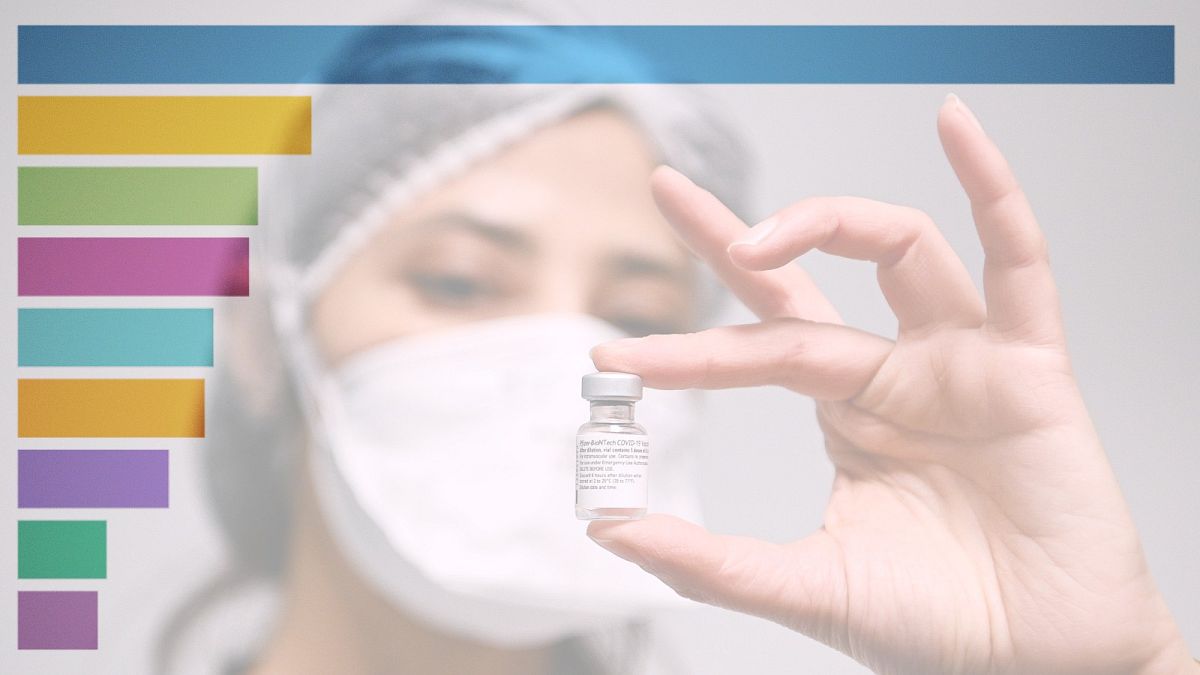
The chart's on the following site shows 33 countries with low vaccination rates in Europe.....The UK is way ahead of everyone.


Canada is not in the EU, so the amount we have received and continue to receive (slowly) seems to be a possible reason why things are not happening as fast as they could. I do agree with lastpointe on the fact that distribution in Canada seems chaotic and ill planned.

By the way, congratulations on your country producing vaccines within the next two weeks....amazing!
 
Yes, I know that the EU countries are also needing more.

I just was pointing out that when our government is happy to get 8 million it is a long way fro what we need

i get a health newsletter from CBC I am going to try to post. It has a pretty clear , for us lay people anyway, explanation for the massive delay in our second dose plans. Lots of controversy. No one els is doing it. However they also have reasons.
 

A behind-the-scenes look at why Canada delayed second doses of COVID-19 vaccines​


Adam Miller​
Danuta Skowronski was poring over Pfizer-BioNTech vaccine data on a Friday night in mid-December when she had an "aha!" moment.

The epidemiology lead at the British Columbia Centre for Disease Control realized she could actually "correct" the data Pfizer had submitted to the U.S. Food and Drug Administration on the effectiveness of just one dose of its vaccine.

In clinical trials, Pfizer couldn't accurately determine the efficacy of a single shot because participants had already received their second dose after three weeks, and there was no comparative one-dose study done.

Pfizer reported an efficacy of 52 per cent for one shot, compared to the more commonly cited 95 per cent after the second.

But Skowronski, who has been working on vaccine effectiveness analyses for more than 15 years, realized the company had included in its analysis the two-week time period immediately after vaccination — before the body's immune response typically kicks in.
skw.png
Dr. Danuta Skowronski with the B.C. Centre for Disease Control is in favour of delaying second doses to four months after analyzing the data Pfizer submitted to the U.S. Food and Drug Administration. (Harman/CBC)​

She told CBC News vaccines are never expected to protect "instantaneously," and that there is always a "grace period" of a couple of weeks that factor into vaccine effectiveness.

"When we took that into account and reanalyzed it for them, what we found was that they were underestimating the efficacy of the first dose, and rather than the efficacy being 52 per cent it was actually 92 per cent, " she said. "For us, that was a game changer."

The finding has changed the face of Canada's vaccine rollout. It led the National Advisory Committee on Immunization (NACI) to change its recommendation on the time people should wait between receiving doses of COVID-19 vaccines, extending it from three weeks to an unprecedented four months.

B.C. announced it would be delaying second doses earlier this week. Ontario, Quebec, Alberta, Manitoba and Newfoundland and Labrador quickly followed suit.

Canada is now an outlier in the global vaccination rollout. No other country in the world has delayed second doses up to four months, and there is no evidence yet on the long-term effect it could have on immunity to COVID-19.

Some scientists say we are venturing into uncharted waters. Others are comfortable with the risk.

Why is Canada delaying second doses?​


NACI says if second doses are stretched to four months across the country starting this month, close to 80 per cent of Canadians over 16 could get at least one shot of the Pfizer-BioNTech or Moderna vaccine by the end of June.

But Canada's chief science adviser Mona Nemer says the decision to delay doses by four months amounted to a "population level experiment."

"The comment from the Chief Science Advisor was most unfortunate," said Skowronski. "It did not reflect the careful risk-benefit analysis that went into this decision, and frankly, that is a science and an art to be able to do that."

But aside from a vague reference to "real-world effectiveness" from Canada and other countries in NACI's recommendations, little evidence has been communicated to Canadians to convince them that the massive change in vaccine rollout strategy is the right move.

NACI says its decision to delay second doses is based on emerging real-world data from Quebec, B.C., Israel, the U.K. and the U.S. that showed "good effectiveness" of between 70 and 80 per cent from a single dose of the vaccines "for up to two months in some studies."

But it also makes clear that these studies haven't yet collected four months of data on the long-term effectiveness of a single dose, meaning NACI is betting on the "high levels of protection" shown so far.

"It's shown us really good vaccine effectiveness two months after receipt of the first dose, and that the effectiveness isn't decreasing over time," Dr. Shelley Deeks, vice-chair of NACI and a lead author of the recommendations, said in an interview.

"After looking at it from all of these angles, and given that we are in a situation of limited supply, the committee came to a strong consensus that we recommend the interval to be extended to four months."

Deeks said NACI will continue monitoring vaccine effectiveness data as it comes out around the world to determine if it needs to further alter its recommendations — meaning another monumental change to Canada's vaccine rollout strategy is possible.

"If we need to reassess and revise the recommendations, we will," she said. "But this will allow more Canadians to receive the first dose and have a vaccine in a more timely manner and will have an impact on serious disease."

'Not based on evidence'​


The move has effectively doubled Canada's doses of COVID-19 vaccines overnight, but some scientists are critical of the move to experiment with delaying intervals.

"The decision is not based on evidence. It's really based on an extrapolation of the evidence," said Brad Wouters, executive vice-president of science and research at the University Health Network in Toronto.

"We've only been giving this vaccine for two months, so we don't have data out to four months — no one in the world has been waiting four months for a second dose."

Wouters says it's unclear if the delay will impact the effectiveness of the second dose, and the decision comes with a lot of uncertainty in the months ahead.

Skowronski says once good protection is established, it doesn't suddenly disappear or "fall of a cliff." Instead, protection against a disease wanes gradually after a vaccination, which buys researchers time to "re-evaluate the optimal timing of the second dose."

She said that longer intervals between a first and a second dose of a vaccine are generally preferred because shorter intervals can interfere with the immune boost response and longer intervals are often associated with ultimately higher antibody levels.

Alyson Kelvin, an assistant professor at Dalhousie University and virologist at the Canadian Center for Vaccinology, says the clinical trials on COVID-19 vaccines ran with the shortest time frame possible so they could get data out quickly, but previous studies on other vaccines show longer intervals are generally better.

Skowronski says its unclear why Pfizer went with a three-week interval for their clinical trials, but it may have been due to pressure to get the vaccine out or because they didn't expect to have such a good protection with the first dose.

"The only reason to go with a shorter interval is if you don't get good protection with the first dose, and a second dose administered sooner could top it up a lot," Skowronski said.

"That's a scenario that we are not dealing with here. We're getting excellent protection after the first dose and we have a clear and present danger threat now with ongoing elevated pandemic disease risk on top of that scarcity of vaccine supply."

Lack of clear communication for Canadians​


While Skowronski is confident delaying the second dose is the right move for Canada, she and other experts feel the communication to Canadians from NACI on the decision could have been more clear.

She said it's important to stress to Canadians that they still need a second dose eventually to have as much protection from COVID-19 as possible, and that they should take any vaccine offered to them to combat its spread.

Dr. David Naylor, who co-chairs the federal government's COVID-19 immunity task force, said the decision to delay doses is "defensible," but agreed the decision could have been explained much more clearly to Canadians.

"There didn't seem to be an organized communications strategy overall," he said.

"The unhappy result is that a decision which might have been welcomed as a wider tide lifting many more boats and helping us end the epidemic more quickly has instead caused a real undercurrent of anxiety. I hope that subsequent communications will clear the air."

Wouters says he worries about how Canadians will interpret the move to delay doses, given the limited understanding the average person might have on the issue.

"There wasn't a lot of information about why the decision was made, what the evidence was, what the process was," he said. "There could certainly be a lot more transparency around the process and how that was done."

snowljnc.png
Lisbeth Mendez comforts Luigini Parravano outside the Richmond Green Sports Centre, in Richmond Hill, Ont., on Monday. Parravano, along with her husband Mario Parravano, were among the first cohort of senior citizens aged 80+ as part of York Region's mass COVID-19 vaccination program. (Evan Mitsui/CBC)​
Dr. Allison McGeer, a medical microbiologist and infectious disease specialist at Toronto's Mount Sinai hospital, says there is "overwhelming" evidence in favour of second doses.

"People who haven't spent time in vaccination and thinking about vaccination are always really anxious about the stuff you don't know in the future with vaccines," she said.

"I'm comfortable with those uncertainties, and with the fact that we can deal with them when we get there. But if you're not comfortable with that, there is a tendency to really worry about the potential consequences of doing that."

Skowronski says Canadians should expect health experts to adapt to and absorb emerging evidence as it becomes available and incorporate that into recommendations.

"You don't do business as usual in the midst of a crisis," she said. "You don't want experts that are holding steadfast to an earlier opinion or viewpoint while knowledge has amassed and moved on.

"You want your experts keeping pace with those developments and making decisions based on what is known as time evolves, especially during a dynamic crisis like an unfolding pandemic."
A health-care worker holds the Johnson & Johnson COVID-19 vaccine in South Africa during a vaccination campaign at Steve Biko Academic Hospital in mid-February. (Phill Magakoe/AFP/Getty Images)​

How approval of Johnson & Johnson's 'one and done' COVID-19 vaccine could change Canada's vaccination game​

A one-dose COVID-19 vaccine is now approved for use in Canada — and vaccine experts say the shot from Johnson & Johnson could give a major boost to countrywide vaccination efforts while offering a "real solution" to hasten the end of the pandemic.

Health Canada authorized its use and released details during a Friday morningannouncement.

The vaccine, made by a subsidiary of Johnson & Johnson, is a non-replicating viral vector option and, unlike the three other vaccines previously approved for Canadian use, was tested during clinical trials as a single shot.

So far, Canada is expecting 10 million doses, with options to purchase up to 28 million more if necessary, with most of those shots set to arrive by the end of September.

Read more from CBC Health's Lauren Pelley on the impact a one dose vaccines could have on Canada.​
A woman wearing a face mask holds a smartphone showing the Stop COVID contact tracing app in Rennes, western France, last October. Manual contact tracing is a mainstay of public health efforts to control coronavirus epidemics. (Damien Meyer/AFP/Getty)​

Asking 'Where do you think you got COVID?' helps contact tracers zero in on superspreader events​

The painstaking detective work of contact tracing usually starts with an infected person and works forward, asking who has that person seen since they became potentially contagious with COVID-19.

But that mainstay of public health has a less high-profile cousin that's become instrumental in spotting superspreader events quickly — working in reverse.

"Instead of asking who did that person potentially give the virus to, you're asking where did that person get the virus?" said Dr. Trevor Arnason, associate medical officer of health with Ottawa Public Health.

"It makes you become better at finding people who have COVID-19 who you might not have known about."

COVID-19 tends to spread explosively in situations where the virus can infect a bunch of people all at once, public health experts say, which is where what's known as backward tracing comes in handy.

Read more from CBC Health's Amina Zafar on the benefits of backwards contact tracing to combat superspreader events.​
 

A behind-the-scenes look at why Canada delayed second doses of COVID-19 vaccines​


Adam Miller​
Danuta Skowronski was poring over Pfizer-BioNTech vaccine data on a Friday night in mid-December when she had an "aha!" moment.

The epidemiology lead at the British Columbia Centre for Disease Control realized she could actually "correct" the data Pfizer had submitted to the U.S. Food and Drug Administration on the effectiveness of just one dose of its vaccine.

In clinical trials, Pfizer couldn't accurately determine the efficacy of a single shot because participants had already received their second dose after three weeks, and there was no comparative one-dose study done.

Pfizer reported an efficacy of 52 per cent for one shot, compared to the more commonly cited 95 per cent after the second.

But Skowronski, who has been working on vaccine effectiveness analyses for more than 15 years, realized the company had included in its analysis the two-week time period immediately after vaccination — before the body's immune response typically kicks in.​
skw.png
Dr. Danuta Skowronski with the B.C. Centre for Disease Control is in favour of delaying second doses to four months after analyzing the data Pfizer submitted to the U.S. Food and Drug Administration. (Harman/CBC)​


She told CBC News vaccines are never expected to protect "instantaneously," and that there is always a "grace period" of a couple of weeks that factor into vaccine effectiveness.

"When we took that into account and reanalyzed it for them, what we found was that they were underestimating the efficacy of the first dose, and rather than the efficacy being 52 per cent it was actually 92 per cent, " she said. "For us, that was a game changer."

The finding has changed the face of Canada's vaccine rollout. It led the National Advisory Committee on Immunization (NACI) to change its recommendation on the time people should wait between receiving doses of COVID-19 vaccines, extending it from three weeks to an unprecedented four months.

B.C. announced it would be delaying second doses earlier this week. Ontario, Quebec, Alberta, Manitoba and Newfoundland and Labrador quickly followed suit.

Canada is now an outlier in the global vaccination rollout. No other country in the world has delayed second doses up to four months, and there is no evidence yet on the long-term effect it could have on immunity to COVID-19.

Some scientists say we are venturing into uncharted waters. Others are comfortable with the risk.

Why is Canada delaying second doses?​


NACI says if second doses are stretched to four months across the country starting this month, close to 80 per cent of Canadians over 16 could get at least one shot of the Pfizer-BioNTech or Moderna vaccine by the end of June.

But Canada's chief science adviser Mona Nemer says the decision to delay doses by four months amounted to a "population level experiment."

"The comment from the Chief Science Advisor was most unfortunate," said Skowronski. "It did not reflect the careful risk-benefit analysis that went into this decision, and frankly, that is a science and an art to be able to do that."

But aside from a vague reference to "real-world effectiveness" from Canada and other countries in NACI's recommendations, little evidence has been communicated to Canadians to convince them that the massive change in vaccine rollout strategy is the right move.

NACI says its decision to delay second doses is based on emerging real-world data from Quebec, B.C., Israel, the U.K. and the U.S. that showed "good effectiveness" of between 70 and 80 per cent from a single dose of the vaccines "for up to two months in some studies."

But it also makes clear that these studies haven't yet collected four months of data on the long-term effectiveness of a single dose, meaning NACI is betting on the "high levels of protection" shown so far.

"It's shown us really good vaccine effectiveness two months after receipt of the first dose, and that the effectiveness isn't decreasing over time," Dr. Shelley Deeks, vice-chair of NACI and a lead author of the recommendations, said in an interview.

"After looking at it from all of these angles, and given that we are in a situation of limited supply, the committee came to a strong consensus that we recommend the interval to be extended to four months."

Deeks said NACI will continue monitoring vaccine effectiveness data as it comes out around the world to determine if it needs to further alter its recommendations — meaning another monumental change to Canada's vaccine rollout strategy is possible.

"If we need to reassess and revise the recommendations, we will," she said. "But this will allow more Canadians to receive the first dose and have a vaccine in a more timely manner and will have an impact on serious disease."

'Not based on evidence'​


The move has effectively doubled Canada's doses of COVID-19 vaccines overnight, but some scientists are critical of the move to experiment with delaying intervals.

"The decision is not based on evidence. It's really based on an extrapolation of the evidence," said Brad Wouters, executive vice-president of science and research at the University Health Network in Toronto.

"We've only been giving this vaccine for two months, so we don't have data out to four months — no one in the world has been waiting four months for a second dose."

Wouters says it's unclear if the delay will impact the effectiveness of the second dose, and the decision comes with a lot of uncertainty in the months ahead.

Skowronski says once good protection is established, it doesn't suddenly disappear or "fall of a cliff." Instead, protection against a disease wanes gradually after a vaccination, which buys researchers time to "re-evaluate the optimal timing of the second dose."

She said that longer intervals between a first and a second dose of a vaccine are generally preferred because shorter intervals can interfere with the immune boost response and longer intervals are often associated with ultimately higher antibody levels.

Alyson Kelvin, an assistant professor at Dalhousie University and virologist at the Canadian Center for Vaccinology, says the clinical trials on COVID-19 vaccines ran with the shortest time frame possible so they could get data out quickly, but previous studies on other vaccines show longer intervals are generally better.

Skowronski says its unclear why Pfizer went with a three-week interval for their clinical trials, but it may have been due to pressure to get the vaccine out or because they didn't expect to have such a good protection with the first dose.

"The only reason to go with a shorter interval is if you don't get good protection with the first dose, and a second dose administered sooner could top it up a lot," Skowronski said.

"That's a scenario that we are not dealing with here. We're getting excellent protection after the first dose and we have a clear and present danger threat now with ongoing elevated pandemic disease risk on top of that scarcity of vaccine supply."

Lack of clear communication for Canadians​


While Skowronski is confident delaying the second dose is the right move for Canada, she and other experts feel the communication to Canadians from NACI on the decision could have been more clear.

She said it's important to stress to Canadians that they still need a second dose eventually to have as much protection from COVID-19 as possible, and that they should take any vaccine offered to them to combat its spread.

Dr. David Naylor, who co-chairs the federal government's COVID-19 immunity task force, said the decision to delay doses is "defensible," but agreed the decision could have been explained much more clearly to Canadians.

"There didn't seem to be an organized communications strategy overall," he said.

"The unhappy result is that a decision which might have been welcomed as a wider tide lifting many more boats and helping us end the epidemic more quickly has instead caused a real undercurrent of anxiety. I hope that subsequent communications will clear the air."

Wouters says he worries about how Canadians will interpret the move to delay doses, given the limited understanding the average person might have on the issue.

"There wasn't a lot of information about why the decision was made, what the evidence was, what the process was," he said. "There could certainly be a lot more transparency around the process and how that was done."​
snowljnc.png
Lisbeth Mendez comforts Luigini Parravano outside the Richmond Green Sports Centre, in Richmond Hill, Ont., on Monday. Parravano, along with her husband Mario Parravano, were among the first cohort of senior citizens aged 80+ as part of York Region's mass COVID-19 vaccination program. (Evan Mitsui/CBC)​
Dr. Allison McGeer, a medical microbiologist and infectious disease specialist at Toronto's Mount Sinai hospital, says there is "overwhelming" evidence in favour of second doses.

"People who haven't spent time in vaccination and thinking about vaccination are always really anxious about the stuff you don't know in the future with vaccines," she said.

"I'm comfortable with those uncertainties, and with the fact that we can deal with them when we get there. But if you're not comfortable with that, there is a tendency to really worry about the potential consequences of doing that."

Skowronski says Canadians should expect health experts to adapt to and absorb emerging evidence as it becomes available and incorporate that into recommendations.

"You don't do business as usual in the midst of a crisis," she said. "You don't want experts that are holding steadfast to an earlier opinion or viewpoint while knowledge has amassed and moved on.

"You want your experts keeping pace with those developments and making decisions based on what is known as time evolves, especially during a dynamic crisis like an unfolding pandemic."​
A health-care worker holds the Johnson & Johnson COVID-19 vaccine in South Africa during a vaccination campaign at Steve Biko Academic Hospital in mid-February. (Phill Magakoe/AFP/Getty Images)​

How approval of Johnson & Johnson's 'one and done' COVID-19 vaccine could change Canada's vaccination game​

A one-dose COVID-19 vaccine is now approved for use in Canada — and vaccine experts say the shot from Johnson & Johnson could give a major boost to countrywide vaccination efforts while offering a "real solution" to hasten the end of the pandemic.

Health Canada authorized its use and released details during a Friday morningannouncement.

The vaccine, made by a subsidiary of Johnson & Johnson, is a non-replicating viral vector option and, unlike the three other vaccines previously approved for Canadian use, was tested during clinical trials as a single shot.

So far, Canada is expecting 10 million doses, with options to purchase up to 28 million more if necessary, with most of those shots set to arrive by the end of September.

Read more from CBC Health's Lauren Pelley on the impact a one dose vaccines could have on Canada.​
A woman wearing a face mask holds a smartphone showing the Stop COVID contact tracing app in Rennes, western France, last October. Manual contact tracing is a mainstay of public health efforts to control coronavirus epidemics. (Damien Meyer/AFP/Getty)​

Asking 'Where do you think you got COVID?' helps contact tracers zero in on superspreader events​

The painstaking detective work of contact tracing usually starts with an infected person and works forward, asking who has that person seen since they became potentially contagious with COVID-19.

But that mainstay of public health has a less high-profile cousin that's become instrumental in spotting superspreader events quickly — working in reverse.

"Instead of asking who did that person potentially give the virus to, you're asking where did that person get the virus?" said Dr. Trevor Arnason, associate medical officer of health with Ottawa Public Health.

"It makes you become better at finding people who have COVID-19 who you might not have known about."

COVID-19 tends to spread explosively in situations where the virus can infect a bunch of people all at once, public health experts say, which is where what's known as backward tracing comes in handy.

Read more from CBC Health's Amina Zafar on the benefits of backwards contact tracing to combat superspreader events.​


Good article, but I can't help but think......we don't even know how long immunity will last even for those who get the two doses. Not sure I like the idea of a whole country (ours) being the great experiment for one dose.
 
I was totally cool with the precepts of calculus until I reached differential equations, and our relationship ended.

GO ... has a differential at the end ... allowing for divides in the path eh? Once got together is deep spaces ... detente rules ... till the fabrication is torn down!

This may happen during dissociation therapy ... as in real life when peace is RIP T'own ... then it is boiled ...
 
But basically the only reason we are even considering one dose is because there doesn't seem to be enough vaccines to go around....and not just here.
Which seems to be shifting, though. I mean Ontario's new schedule is bumping some groups by a month or two (I think 60-64 got moved back from July to May) and that's just with Astrozeneca approved. J&J should, I assume, open things up even more, esp. since it is single dose by design.
 
In the end what do we really know when we get there if we remain doing the same old things to improve the economy to the detriment of the po' demons ... a distant parable hidden in the myth that is the way we think we can control the entire thing ... wholly?

May be a fuzzy metaphor like the Boson! These can whip their way through the densest spots!

While the greater love rule prevails beyond that ... you cannot escape what you don't understand ... it haunts! Often as a covariant of a ballad ...

Ethereal bunches get it ...
 
NWT numbers seem a bit funny to me - they used up the exact number of doses. So wastage & extracting extra doses from the vials averaged out perfectly if those numbers are accurate.
Overall watching as percentage used drops with deliveries and then rises as used, SK and AB seem to be managing when comes in really well.
 
Austria has suspended a batch of Astra Zeneca that may or may not have caused one death and a severe illness in another, but it did happen after being vaccinated.
They were fairly young....in their 40's and 30's.


And the Astra Zeneca vaccine was found to have no link to deaths of nine elderly people in South Korea after being recently vaccinated.

 
Some immunologists are also concerned about the way the 2nd doses are being handled for the mRNA vaccines:

I think the content of the letter brings up some important concerns, when copying it turns into a random string of characters though.
 
Last edited:
@Northwind in the letter it states a lack of data, you had mentioned there being data, were you able to find any?

I haven't looked for any. Dr Henry made references to where data is being generated. It is my understanding that the vaccine manufacturers are starting to agree with this and to show data too.
 
The Berlin newspaper has regularly a report from a male nurse working on several ICUs in Berlin. In the last one, he commented that now, he finally got his vaccination ( he was a contract worker from outside the hospitals, therefore got it later than regular staff, despite working directly with Covid patients). He said, while he would have wished to get the Pfizer over the Moderna, he is not picky at this point, seeing how Covid continues to put his patients in critical condition. That day, they had delivered a baby from a pregnant woman at the 25 th week, which needed to be done so they could turn her on her stomach. ( a now known way of improving breathing in ventilated covid patients).
Just the thought of this needing to be done to a pregnant woman and child creeps me out.
 
Interesting, phase 2A is supposed to start the 15th, some pharmacies just went ahead though. It wasn't publicized they would be doing that, but they didn't have appointments filled from those who qualified in 1B so they moved on (as they were supposed to). Sounds like if people are using a pharmacy regularly that is offering the vaccine they may get in a bit sooner.
 
Back
Top