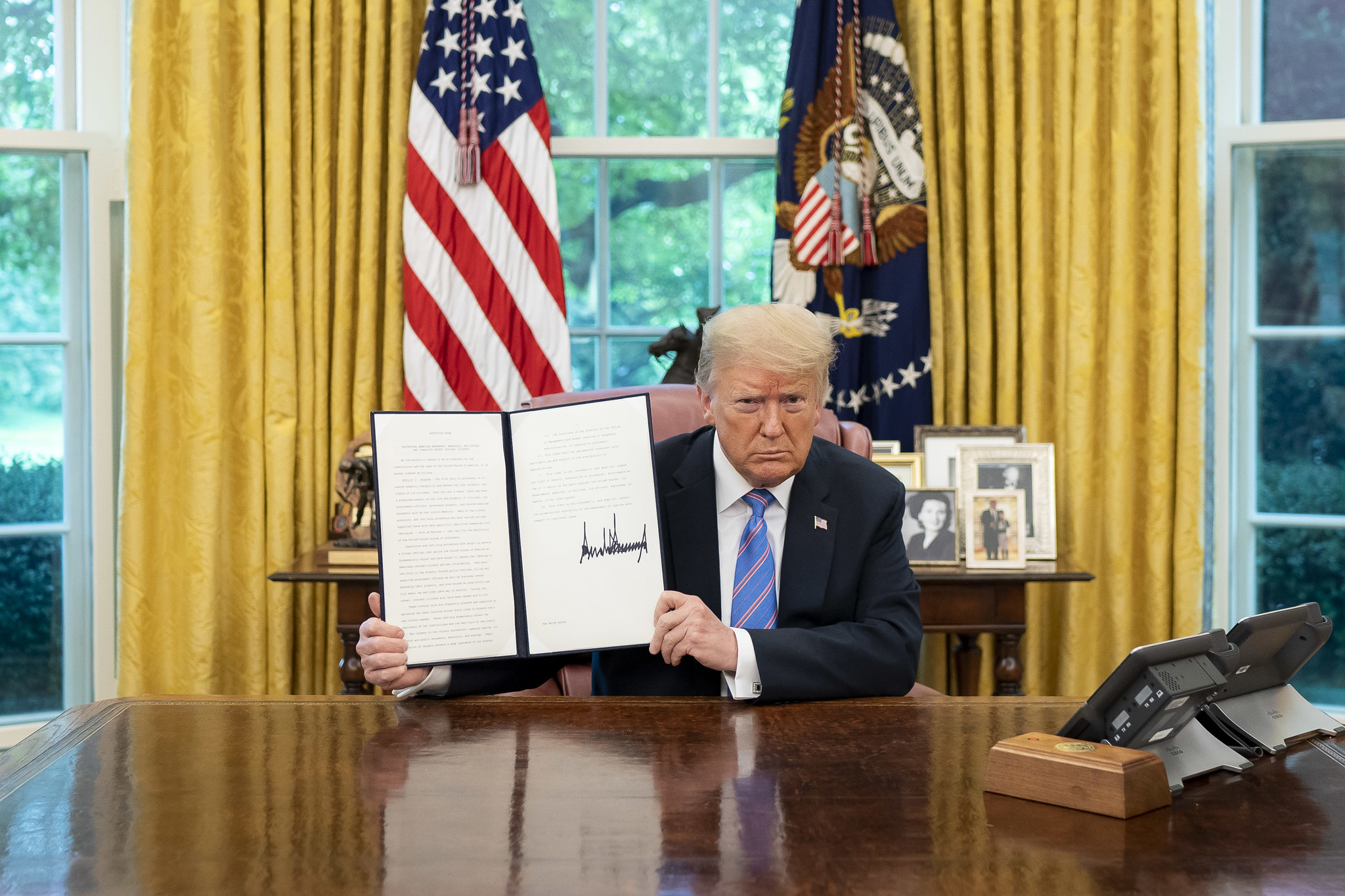
Except if you read the article, the reason given is the digital services tax which is hardly "aligning with the failing EU". That's the tax on digital providers and applies to EU companies like Spotify, not just the US. Frankly, this probably just Trump throwing another tantrum in hopes of getting his way in the talks, i.e. getting the US exempted from the tax or the tax removed. I imagine the talks will resume before too long based on past eruptions like this.
Here is Michael Geist on, among other things, the DST
The Canadian political and business communities are unsurprisingly focused on the prospect of U.S. President Donald Trump instituting 25% tariffs on Canadian goods and services. The threat of tariffs, which could spark a retaliatory response by Canada and fuel a damaging trade war, would likely...

www.michaelgeist.ca
"The U.S. has already filed for dispute resolution on the DST, but one of President Trump’s executive orders calls for investigations of any foreign countries that “have any tax rules in place, or are likely to put tax rules in place, that are extraterritorial or disproportionately affect American companies.” The Canadian DST surely qualifies and Canada’s bet that retaliation was a bluff predictably looks like a bad one.
Given the efforts of the major tech companies to curry favour with the new U.S. administration, expect the elimination of the tax to emerge as a key U.S. demand. The U.S. unlikely to stop there, however. The mandated streaming payments under Bill C-11 (currently frozen due to a legal challenge) have been characterized as a streaming tax by opponents, while the online news bill was framed as a link tax. U.S. companies are again the primary target of these payments. Even if the U.S. concludes that these aren’t taxes, another executive order on America First Trade calls for a review of the USMCA, making these rules a potential target in any future trade negotiation. In fact, President Trump is reportedly anxious to expedite review of the trade deals.
Canada now finds itself in an untenable position when it comes to digital policy. Years of tough talk on making “web giants pay” is likely to give way to concessions in the face of even tougher talk from President Trump that could create economic threats that far surpass the potential benefits of largely ill-advised policies. Further, even issues that fall below the U.S. radar screen are also dead, victims of a combination of political disinterest (C-27), miscalculation (C-63), or mistakes (C-26). The risks associated with these policies were evident from the start but the government instead claimed that its approach would create a model that others would emulate. Today it appears that little will remain of a digital policy agenda that is either dead or likely to die."
which he wrote this year's Jan 22