Wondercafe2 ... in SPAAAAAAACE!

Welcome to Wondercafe2!

A community where we discuss, share, and have some fun together. Join today and become a part of it!

And it appears that NASA's proof of concept proved its concept. They appear to have knocked 32 min (+/- 2 min) off the orbit of Dimorphos (the smaller asteroid) around Didymos (the larger). Of course, to change the course of a large asteroid that could be a serious threat would require a much bigger impactor, but at least we know that in principle, it could work.

Obviously they channelled Minnesota Fats :3
 
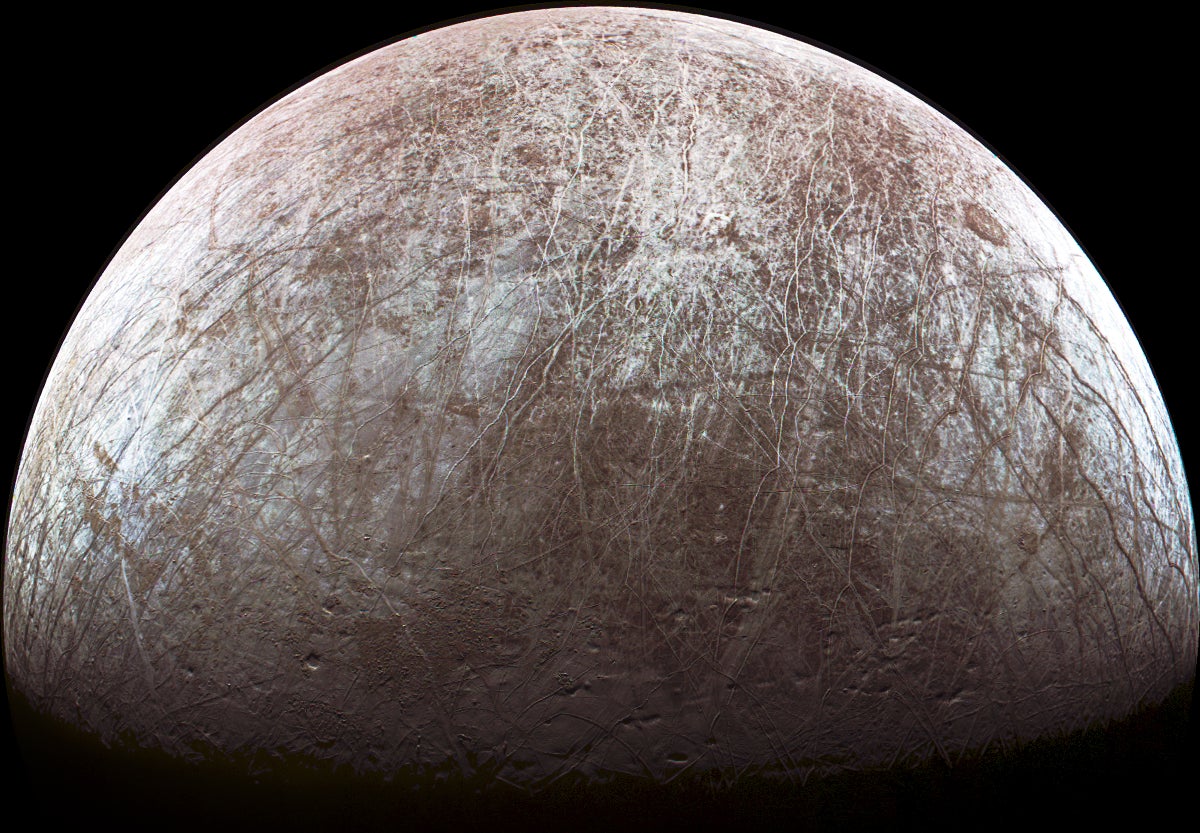
The Juno space probe was originally supposed to focus on the planet Jupiter, not its moons. However, a recent extension to the mission has enabled changes to Juno's orbit so that it can visit some of the moons. And first up is Europa. Europa is under intense scrutiny nowadays because there is good evidence of a large, sub-surface ocean of salt water on the moon. Which, as with a similar ocean on Saturn's moon Enceladus, opens up the possibility of life similar to what is found on geo-thermal vents in our oceans. Juno is not really designed to look for more evidence about the ocean or life, but the upcoming Europa Clipper is and the Europa Clipper team hopes to use the images and data from Juno's Europa fly-by to help with planning their mission.

 
I am trying to wrap my mind around the Clipper, even if it can get within a few hundred kilometres of the surface, being able to assess if the ocean is habitable or even contains life.
 
I am trying to wrap my mind around the Clipper, even if it can get within a few hundred kilometres of the surface, being able to assess if the ocean is habitable or even contains life.
The idea is that if Europa has water plumes erupting through the ice the way Enceladus does, they can fly through the cloud of water and other molecules that shoot out into space to get samples and analyze them in an onboard lab for molecules that could be an indicator for life. There has been discussion of a lander for either Europa or Enceladus (forget which) but I don't think it is planned for Clipper.
 
How big are these probes?
Not sure if the final design for Clipper is out yet. I would have to check. Here's the official specs for Juno from JPL, but a lot depends on mission requirements, what instruments and experiments they carry, how much fuel they need to carry, and things like that:

Spacecraft Dimensions: 11.5 feet (3.5 meters) high, 11.5 feet (3.5 meters) in diameter
Solar Arrays: length of each solar array 29.5 feet (9 meters) by 8.7 feet (2.65 meters). Total surface area of solar arrays: more than 650-feet (60-meters) squared. Total number of individual solar cells: 18,698. Total power output (Earth distance from sun): approximately 14 kilowatts; (Jupiter distance from sun): approximately 400 watt
Weight: 7,992 pounds (3,625 kilograms) total at launch, consisting of 3,513 pounds (1,593 kilograms) of spacecraft, 2,821 pounds (1,280 kilograms) of fuel and 1,658 pounds (752 kilograms) of oxidizer
 
Which ends up looking like this:

449px-Juno_spacecraft_model_1.png
 
Voyager's main body was smaller, but it has an antenna that's a similar diameter to Juno and a couple long booms that hold some of its instruments. It does not, however, have solar panels since it is nuclear-powered. That's why it is still functioning so far from the sun. Juno would not be able to operate that far out because sunlight would be too weak.

640px-Voyager_spacecraft_model.png
 
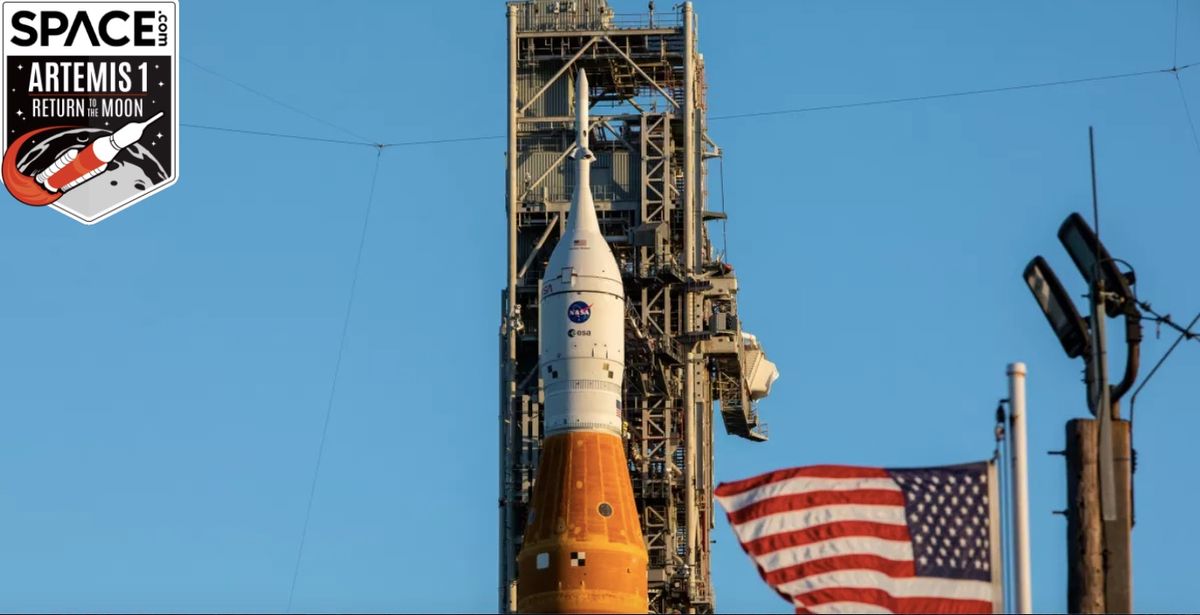
Next attempt at launching NASA's Artemis goes tomorrow (launch window opens at, yawn, 1am tomorrow morning). This is an uncrewed test postponed from earlier in the year. It will send an empty Orion capsule into lunar orbit to test the booster (NASA's Space Launch System, SLS) and other systems. If it succeeds, then a crewed orbit of the moon will happen in 2024, followed in 2025 by the first human landing on the moon since 1972's Apollo 17. But that all depends on how tomorrow's launch goes.

 
The Leonid meteor showers have started and will continue for a few more nights. As for the rocket launch, I trust the meteor shower would not be an issue.
 
The Leonid meteor showers have started and will continue for a few more nights. As for the rocket launch, I trust the meteor shower would not be an issue.
Yeah, they worry mostly about weather. The meteors in those showers are no bigger than the ones that it will encounter once it is out of the atmosphere, I imagine. The rocket already sustained minor damage in Hurricane Nicole but apparently, it's fixed. Right now, weather looks good for the launch window.
 
I like the concept of an unscrewed launch ... in which someone is bound to be shafted! Mostly wee folk it is assured ...

Recall you are not allowed to be critical what so ever ... said to be un Christian by the powers thereof ... pure humiliation ad charity as all is given UP? Single dictionary grace ... no metaphor allowed!
 
Here's the highlights reel of the launch from NASA's channel:


And the full broadcast:


Short version: The launch went off as planned and the Artemis 1 capsule is now headed for the Moon.
 
There was a nice image of the dirty Earth (mire thing) from about 80,000 miles out there this AM!

Imagine tiered dirt as stacked up archeologically!

Perhaps why the brain stem has this vertical orientation ... the bottom end being in the dark and occidental region ... some say occipital and OS'm! Like the renal function based on osmotic powers ...
 
Back
Top