My Weekly Devotional

Welcome to Wondercafe2!

A community where we discuss, share, and have some fun together. Join today and become a part of it!

Jae said:
As you know John, you're a minister in one of Canada's most-liberal protestant denominations (if not the most-liberal). It would be more surprising if people were not calling you a liberal.

While that is true it also points out that many people are happily and ignorantly judging the book by its cover. Those who like to think themselves more conservative in their theology than I am are very fond of turning a blind eye to passages like 1 Samuel 16: 7.

Not to mention the fact that they clearly do not understand that Conservative clearly means to move slowly rather than quickly. I have 300 years of moving slowly on any Christian Fundamentalist. They are the ones who have changed, not I.
 

I believe the #1 way God communicates to us personally is through his word - which has been translated into about 600 languages including English.
Has there been verified proof that those speaking in tongues have unknowingly spoken in one of those 600 languages without any prior knowledge of that language? Especially in this day and age seeing that we have the benefit of video and interpreters.
 
While that is true it also points out that many people are happily and ignorantly judging the book by its cover...

Perhaps. I have wondered during my time on WC and WC2 how a non-liberal such as yourself can function as a leader in a very-liberal denomination. Do you tend to be called to churches that are already themselves non-liberal? Do you transform the church while you're with them?

revjohn said:
Those who like to think themselves more conservative in their theology than I am are very fond of turning a blind eye to passages like 1 Samuel 16: 7.

"But the Lord said to Samuel, 'Do not look at the way he looks on the outside or how tall he is, because I have not chosen him. For the Lord does not look at the things man looks at. A man looks at the outside of a person, but the Lord looks at the heart.'" - NLV

However, you're not a reform theologian on the outside, right (unless you're meaning the beard), but in your heart. And you're in a denomination that's filled with people who have liberal theology in their heart. Why not move to a denomination such as Christian Reformed or United Reformed?
 
Someone speaking a foreign language(tongues) that he has no previous knowledge of and recorded on video. Then after being recognized as a known language.... interpreted separately by 3 different interpreters that know that language.
I am just wondering if tongues is actually supposed to be an actual language, if it has been verified as such anywhere.

Probably would be especially useful if the interpreters were unbelievers.....
 
Waterfall said:
Someone speaking a foreign language that he has no previous knowledge of recorded on video and then being recognized as a known language....and then being interpreted separately by 3 interpreters that know that language.
I am just wondering if tongues is actually supposed to be an actual language, if it has been verified as such anywhere.

Probably would be especially useful if the interpreters were unbelievers.....


I know of no such video exercise Waterfall. I believe that tongues can be manifested as an actual language (current or archaic) and/or a personal prayer language.
 
Jae said:
Perhaps. I have wondered during my time on WC and WC2 how a non-liberal such as yourself can function as a leader in a very-liberal denomination. Do you tend to be called to churches that are already themselves non-liberal? Do you transform the church while you're with them?


I have served churches that tend to run moderate. I'm not called to change anybody's mind, I am called to preach the Gospel of Christ Jesus and the grace of God. If minds change it is not my doing.

Jae said:
However, you're not a reform theologian on the outside, right (unless you're meaning the beard), but in your heart.

Well pictures of Spurgeon and myself are not dissimilar.

That said the issue is people hear The United Church of Canada and they judge based on what they think they know about the denomination. Stereotyping members rather than discerning anything remotely truthful.

Jae said:
And you're in a denomination that's filled with people who have liberal theology in their heart.

Filled? If it was full there would have been no room for me or the others like me. Some of whom are Reformed others prefer to be called Puritan others would choose to be known as Jesus Freaks. It is easy to make a judgment based only on a story or two. It is no less ignorant and often mistaken.

Jae said:
Why not move to a denomination such as Christian Reformed or United Reformed?

Because God didn't call me to one. I was called to be a minister in The United Church of Canada. Not everyone was thrilled about that, at the end of the day every examiner called to the task of testing me could find no reason not to ordain me. Here I stand, I can do naught else. have I been invited elsewhere? Yes, while at Redeemer I was seriously wooed and made to feel welcome. God had other plans for me. I just follow.
 
Waterfall said:
Someone speaking a foreign language(tongues) that he has no previous knowledge of and recorded on video. Then after being recognized as a known language.... interpreted separately by 3 different interpreters that know that language.
I am just wondering if tongues is actually supposed to be an actual language, if it has been verified as such anywhere.

Probably would be especially useful if the interpreters were unbelievers.....

That would be a fairly convincing and compelling test. One would think, given that the scriptures overwhelmingly relate instances where the tongue spoken is another human language that we would see more and more of it at play. And yet, it is, apparently the rarest form of tongues found in the Christian Church today. Almost non-existent actually and that is one of the things that cessationists point to when they argue that the gift of Tongues has been silenced.

Because the Church speaks all human tongues there is no impediment to spreading the Gospel to all nations such as in the beginning.

All we appear to hear nowadays is the ecstatic language of the angels and that was demonstrated by Parham to fail as an Evangelism strategy
 
I have served churches that tend to run moderate. I'm not called to change anybody's mind, I am called to preach the Gospel of Christ Jesus and the grace of God. If minds change it is not my doing.


(y)

revjohn said:
Well pictures of Spurgeon and myself are not dissimilar.

You, Spurgeon, and Thomas Mulcair.

revjohn said:
That said the issue is people hear The United Church of Canada and they judge based on what they think they know about the denomination.

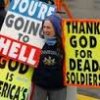
Natch. Same thing goes with any denomination I imagine. A lot of people seem to think all Baptists are like this...

upload_2017-5-26_18-27-8.jpeg

revjohn said:
Stereotyping members rather than discerning anything remotely truthful.

Is there not usually some truth behind any stereotype? The stereotype I've heard of folks in the UCCanada is that they're all a bunch of liberal semi-quasi-Christians. Is the truth not that many of the folks in the denomination are liberal Christians?

revjohn said:
Filled? If it was full there would have been no room for me or the others like me. Some of whom are Reformed others prefer to be called Puritan others would choose to be known as Jesus Freaks. It is easy to make a judgment based only on a story or two. It is no less ignorant and often mistaken.

What would you estimate as the percentage of non-liberals in the denomination?

revjohn said:
Because God didn't call me to one. I was called to be a minister in The United Church of Canada. Not everyone was thrilled about that, at the end of the day every examiner called to the task of testing me could find no reason not to ordain me. Here I stand, I can do naught else. have I been invited elsewhere? Yes, while at Redeemer I was seriously wooed and made to feel welcome. God had other plans for me. I just follow.

Fair enough. What form did your calling take?
 
Do you have a working definition of "liberal" and "non-liberal" theology, @Jae? It might be important to define these terms if we are going to pursue this discussion.

Interested to see where the conversation goes . . . P3
 
Do you have a working definition of "liberal" and "non-liberal" theology, @Jae? It might be important to define these terms if we are going to pursue this discussion.

Interested to see where the conversation goes . . . P3

As we found in my thread on defining progressive Christianity, these working definitions are usually a bit fuzzy at best. Really, someone needs to pull up a poll of UCCan members that presented some kind of definition and start from there.
 
I don't know if there is any such poll which offers the definitions you are seeking.

Polls have been conducted about what United Church members believe to be true. But I am not aware of any which have sought to define some of these terms (progressive, liberal, non-liberal etc.)
 
Is what we don't know about God ... more disturbing than what we do know?

If God is word ... could the word be quite varied? Leads us to cognizance about things unknown ... like the source of some words ...

Did older kings speak King James English? Would this eliminate earlier lights on the situation of tran-science in humans? It'll pas ...
 
I appreciate the thoughts expressed by the author here: Conservative vs. Liberal Christianity: Which is Better?
That's actually not a bad article and it's a good illustration of the mistake we make if we read and respond to the title but don't read the actual article. The title turned me off. It sounded as if it was setting up a competition. "Which one's better?" But I rather liked the way the author handled it. There are positive and negative to both. As I've said I claim neither adjective because I find them unhelpful descriptors in that there's no commonly accepted definition - just a bunch of stereotypes usually used to attack or judge others because they're not like me. In truth, most Christians have elements of what would be considered both liberal and conservative. I think that as long as there's a serious effort to engage with the Word and to discern God's call then I'm OK with it. As the author notes, a too smug certainty that "I've got it right and everybody else is wrong" is present on both sides of the spectrum.
 
I could not let this week pass without some reflection on the horrific incident in Manchester on Monday. So my reflection today revolves around how such acts lead us easily into irrational fear and hatred, and how we might try to overcome that temptation.

My Faith Thoughts: A Thought For The Week Of May 22, 2017

I noticed this post earlier in the week but waited to read the blog until I had time to read and contemplate - I always get a lot out of Steve's blogs.
So today I read this thought-provoking reflection on terrorism, triggered by the attack in Manchester where so many young people were killed or injured. It's called terrorism because it is meant to invoke fear - terror that paralizes the ability to think anything but fear, hatred, revenge.
But in the days that followed, as news came out, I looked for the helpers. And there were many.
Two homeless men who were among the first to respond. Instead of running for their lives, they ran forward and rendered first aid and comfort to the injured and dying.
A taxi-driver interviewed on the news told of the taxis arriving at the scene offering free services to drive the frightened and confused young people home - and it was revealed that this taxi driver, and no doubt others, was Muslim.
A woman who gathered 30 or so young people around her and took them to a safe spot (I believe a hotel) where they could try to contact their parents.
And the many others who opened their homes and hearts to the victims until order could be restored.

I looked for other comments on this week's blog, but instead I found post after post about speaking in tongues. What gives? Surely the actions of many good people on this horrible night are more important and show more love than a gift of tongues.
 
I noticed this post earlier in the week but waited to read the blog until I had time to read and contemplate - I always get a lot out of Steve's blogs.
So today I read this thought-provoking reflection on terrorism, triggered by the attack in Manchester where so many young people were killed or injured. It's called terrorism because it is meant to invoke fear - terror that paralizes the ability to think anything but fear, hatred, revenge.
But in the days that followed, as news came out, I looked for the helpers. And there were many.
Two homeless men who were among the first to respond. Instead of running for their lives, they ran forward and rendered first aid and comfort to the injured and dying.
A taxi-driver interviewed on the news told of the taxis arriving at the scene offering free services to drive the frightened and confused young people home - and it was revealed that this taxi driver, and no doubt others, was Muslim.
A woman who gathered 30 or so young people around her and took them to a safe spot (I believe a hotel) where they could try to contact their parents.
And the many others who opened their homes and hearts to the victims until order could be restored.

I looked for other comments on this week's blog, but instead I found post after post about speaking in tongues. What gives? Surely the actions of many good people on this horrible night are more important and show more love than a gift of tongues.

I follow a woman from Birmingham, UK on Twitter and she was retweeting the storm of tweets offering shelter and other assistance that night. What sometimes gets forgotten in an event like this is that for every lunatic with a bomb or gun, there are dozens ready to offer help.
 
Jae said:
Is there not usually some truth behind any stereotype?


Stereotypes rely on half-truths at best. An exaggeration of one trait and a willing ignorance of others that might tip the scales against (typically) pejorative exaggerations.

Jae said:
The stereotype I've heard of folks in the UCCanada is

Well, let's unpack the stereotype.

Jae said:
that they're all a bunch of liberal

As friend Paradox3 asks, what is the operating definition of liberal at play?

dictionary.com said:
1. favorable to progress or reform, as in political or religious affairs.

2. (often initial capital letter) noting or pertaining to a political party advocating measures of progressive political reform.

3. of, pertaining to, based on, or advocating liberalism, especially the freedom of the individual and governmental guarantees of individual rights and liberties.

4. favourable to or in accord with concepts of maximum individual freedom possible, especially as guaranteed by law and secured by governmental protection of civil liberties.

5. favoring or permitting freedom of action, especially with respect to matters of personal belief or expression:
a liberal policy toward dissident artists and writers.

6. of or relating to representational forms of government rather than aristocracies and monarchies.

7. free from prejudice or bigotry; tolerant:

8. open-minded or tolerant, especially free of or not bound by traditional or conventional ideas, values, etc.

9. characterized by generosity and willingness to give in large amounts: a liberal donor.

10. given freely or abundantly; generous: a liberal donation.

11. not strict or rigourous; free; not literal: a liberal interpretation of a rule.

12. of, relating to, or based on the liberal arts.

13. of, relating to, or befitting a freeman.

14. a person of liberal principles or views, especially in politics or religion.

15. (often initial capital letter) a member of a liberal party in politics,especially of the Liberal party in Great Britain.

Some repetition of idea among these distinct definitions. Which one is the one you are applying? Which one is it that you think others are applying? Which definition is, to your mind, a definite character flaw? Any definitions, to your mind, that might qualify as character triumphs?

Some of the definitions of liberal actually wind up as the founding principle for what some believe are conservative values.

Definition #1 would apply to anyone not Roman Catholic since the Eastern Orthodox and Presbyterian Traditions withdrew. One could argue that both were attempts to correct flawed drift in the Roman Catholic perspective but one would have great difficulty in saying that these schisms were not motivated by more rigid perspectives on the role of the priest in the life of the Church.

Definition #3 would apply to anyone who champions a Free will capable of choosing good over and against a Fallen will not able to make such a choice of its own accord.

Definition #4 would apply to anyone who has ever positively defended the separation of Church and state since it is a governmental protection of individual religious liberty.

And I will resist the attempt to continue through the list for the sake of brevity.

The question remains, which definition of liberal is the insult that folk are intending to pin on The United Church of Canada?

Jae said:
semi-quasi-Christians.

Hopefully you meant semi or quasi Christians because anybody who runs semi and quasi together is not attempting to be descriptive but derogatory.

So let's unpack both

Dictionary.com said:
Semi
1. a combination form borrowed from Latin, meaning "half," freely prefixed to English words of any origin, now sometimes with the senses "partially," "incompletely," "somewhat": semiautomatic; semidetached; semimonthly; semisophisticated.

And,

Dictionary.com said:
Quasi
1. a combining form meaning “resembling,” “having some, but not all ofthe features of,” used in the formation of compound words:
quasi-definition; quasi-monopoly; quasi-official; quasi-scientific.

The criticism, then, is that we are not completely Christian, or put another way, not Christian enough.

Romans 3: 23 said:
for all have sinned and fall short of the glory of God,

What makes some sinners Christian enough? Since all are, according to Romans 3: 23, incomplete.

Jae said:
Is the truth not that many of the folks in the denomination are liberal Christians?

Hard to answer until we know which precise derogatory definition of liberal is at play.

Further to that a deeper underlying question is why should Christian brothers and sisters be thought less of simply because they are liberal? The same question applies to Christian brother and sisters who identify as conservative.

Based on my observations there is an interesting phenomenon that is in place which does nothing, I believe, to unite or edify the body of Christ.

My apologies for not having convenient illustrations.

Conservative Christian A says, "I am a conservative Christian."
Liberal Christian A hears, "I am a conservative."

Liberal Christian A says, "I am a liberal Christian."
Conservative Christian A hears, "I am a liberal"

As if the truth of either statement is a denial of Christ.

Certainly, the arguments will be had that the liberal or conservative understanding of Christ is inherently incomplete. Only a fool thinks that their particular slant could be anything but incomplete.

The whole thing amounts to folk with planks in their own eyes ridiculously attempting to fish splinters out of the eyes of another.

Good theology is neither liberal or conservative so much as it is a godly combination of both.

Bad theology is neither liberal nor conservative so much as it is a demonic insistence on calling good evil and evil good.

Jae said:
What would you estimate as the percentage of non-liberals in the denomination?

Again, until we have an operating definition of liberal speculation is a fool's errand. It also presupposes, that there is a number which justifies ignoring the Christian element because there is not enough liberal or conservative in the mix. That is, to be quite frank, an ungodly perspective.

Jae said:
Fair enough. What form did your calling take?

I heard the voice of God call me to ministry. I hoped I was the victim of a prank or that I was having some kind of mental crisis. No such luck.

In fear and trepidation I, like Gideon before me, called upon a figurative fleece as proof of call. There were three components to my particular fleece. 1) Three separate instances of individuals suggesting I am being called to ministry. 2) Admission to a University where I could pursue my studies to the eventual end of ordination and finally, 3) That all of this be accomplished in a three year time frame and I was open to having it happen faster.

The fleece test I set out was met so I responded.

This required me to appear before the Session of my home congregation and submit to their discernment. My minister opposed on the grounds that I was too "conservative" for The United Church of Canada. He was but one vote on the Session. They moved that I be presented to Erie Presbytery for approval. So at least a majority felt that my call should be tested further. Erie Presbytery did not initially interview me but did permit me to enter the Discernment process where, over the course of a year I was interview, examined and questioned. That committee of five (two clergy Presbyters, 2 members of my Session and an advocate of my own choosing) agreed that I was called to the office of Word, Sacrament and Pastoral Care within The United Church of Canada and that I should continue with my studies and do all in my power to meet the remaining requirements that the Denomination might ask of me. Presbytery accepted the recommendation and presented me to Conference where I was again interviewed, examined and questioned for roughly two hours. This committee approved me to begin supervised field study.

A glitch in my first internship caused Erie Presbytery to rethink their support. I am not exactly sure why. The internship did not fail because I screwed up. It failed because my Supervisor detached his retina and would be unavailable for 8 of the 16 weeks I was to be in the field. Another Educational Supervisor was not available to step in. It happens. At any rate Erie decided that for the rest of my Academic requirements I would have to meet with a Presbytery Committee once per semester (Vancouver Burrard Presbytery in Vancouver generously agreed to undertake this work on Erie Presbytery's behalf) with the proviso that if I received an unfavourable report from Burrard Presbytery I was flying home on my own dime to give an account of myself.

Four meetings with Burrard Presbytery resulted only in them being confused about Erie's concern.

Along the way the chaplain at VST wrote annual assessments of my performance at seminary which included input from the faculty. None of that ever raised any concern for Erie Presbytery.

With about 3 months to go before Graduation I flew back for a final examination by Hamilton Conference. It was a day long examination with a significant amount of time spent discussing the doctrinal statements of The United Church of Canada. At the end of the day that team was more than happy to recommend me for ordination.

Graduation in early May and then back to Hamilton Conference's Annual General Meeting where I was given 3 minutes to present myself to the court. I used a little over two. Which was a hit because all but one other went over the allotted time. Finally, 400 delegates to the Annual General Meeting cast a vote that would either see me ordained or denied.

At least 201 delegates had no problem with me being ordained.

Now having just passed the 19th anniversary of my ordination and having worked at almost every level of the Church I can honestly say that I have won the respect of many colleagues in ministry who would not agree with my theological positions but have no doubt that I minister with conviction and compassion. I have served 10 different pastoral charges in one capacity or another, some briefly because that is all that was required of me, to stand in a gap until a new minister could be found or a minister on sick leave could recover. I know that there are some parishioners who don't always agree with me or my ideas. None can testify that I was not open to hear theirs and none can testify that I did anything to discourage them from exploring their faith further. They could say that I was biased in offering suggestions for further study.

That is not a crime in The United Church of Canada.

Because I have been through some unpleasant circumstances I have become a resource to colleagues who must deal with the same or similar problem. That isn't about which part of the theological spectrum we inhabit, it is about having navigated a path through a proverbial minefield and remaining intact while doing so.

My theology is not rigid, it is as flexible as good strong bone. My pastoral muscles are as strong, if not stronger than ever.

I am happy to be called to serve, I am happy to serve and my service makes others happy.
 
Back
Top