

Someone (@Waterfall ?) asked about coping strategies in my first thread. I've decided to start a thread on this. I'll likely add to it as I think of more ideas.
Today I had a great lunch with four other women who have also been getting cancer treatment. We met through a FB group and have a Messenger chat set up. Unfortunately, several women have died since we started it. Still, it's an excellent support.
Most of you know I worked in a profession where I helped others develop coping skills. Now I'm getting to put my money where my mouth is. While I'm sure I used these skills before, they are more important with a cancer diagnosis. For instance I have a whole new appreciation for "one day at a time".
When I was first diagnosed I used denial strategically. When I was waiting for the next step in the process, I lived my life as if nothing was wrong. I felt fine and normal so it worked. I suppose I still use denial strategically on occasion. It may not be denial but just living life and dealing with crossing bridges when they appear. There is no sense worrying about things in the future. Things we cannot control. That has worked fairly well for me.
Early in my diagnosis I decided to use my creativity for something other than making myself crazy. This is closely related to the previous strategy. There will be enough to worry about without creating more problems. I have a background of using cognitive behavioural therapy (CBT) and solution focussed therapy so this was probably a product of that background. A CBT concept is the notion of "catastrophizing". That's basically where you make a problem bigger than it needs to be. Of course it doesn't help. By committing to use my creativity well, I have managed to stay on a fairly even keel. Of course, I have had my moments where I've forgotten that. I will say, sewing bags or knitting sweaters is far more fun than worrying and catastrophizing.
I learned about Dialectical Behavioural Training (therapy?) just before I left work. While I don't remember all the concepts, a couple have been incredibly useful. The first is the concept of "Radical Acceptance". That is where you accept what you've been given. It doesn't mean you have to like it. The idea is that when you accept it you can respond better than if you waste energy resisting it. I can assure you I have not liked the cancer diagnosis. By accepting it, I could better deal with the information, treatment and whatever came my way. The second DBT concept is "Generous Assumptions" where you make a generous assumption about other people's behaviours. It might be something like believing the person who cut you off in traffic was busy rather than believing s/he is an a**hole. When I make generous assumptions I assume the health professionals I meet have my best interests at heart and they are competent. I trust until they give me reason to not trust. Fortunately, everyone I've met so far has lived up to that assumption. I'm very thankful to have met some great people.
Finally (for now) I decided to be my own advocate. I spent many years advocating for and supporting others. Now it was my turn. It has meant chasing down referrals or missing whatevers. It has meant speaking up where necessary. I've become more assertive (and outspoken) I'm sure. I've hopefully also become more empathetic and kind.
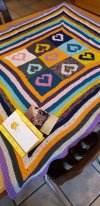
I just thought of another one. When I told people about my diagnosis they all asked to be kept informed of how I was doing. That was overwhelming. I understood why they were asking for that and appreciated their concern. Still, repeating difficult information over and over was tough. After much thought I decided to create a private FB group where I could give updates all at once. Of course the people closest to me got those updates in person or by phone. That group turned out to be a form of journalling for me and it also showed me I had a loving circle of support around me. I had prayers of all stripes and from all directions coming my way - Sikh, Jewish, all forms of Christian, Muslim, Pagan. Heck even the atheists did their part. It was much appreciated. My knitting buddies up north got together and knitting a blanket for me. I call it my knitted hug, and included the rest of my caring circle in that blanket hug.
Today I had a great lunch with four other women who have also been getting cancer treatment. We met through a FB group and have a Messenger chat set up. Unfortunately, several women have died since we started it. Still, it's an excellent support.
Most of you know I worked in a profession where I helped others develop coping skills. Now I'm getting to put my money where my mouth is. While I'm sure I used these skills before, they are more important with a cancer diagnosis. For instance I have a whole new appreciation for "one day at a time".
When I was first diagnosed I used denial strategically. When I was waiting for the next step in the process, I lived my life as if nothing was wrong. I felt fine and normal so it worked. I suppose I still use denial strategically on occasion. It may not be denial but just living life and dealing with crossing bridges when they appear. There is no sense worrying about things in the future. Things we cannot control. That has worked fairly well for me.
Early in my diagnosis I decided to use my creativity for something other than making myself crazy. This is closely related to the previous strategy. There will be enough to worry about without creating more problems. I have a background of using cognitive behavioural therapy (CBT) and solution focussed therapy so this was probably a product of that background. A CBT concept is the notion of "catastrophizing". That's basically where you make a problem bigger than it needs to be. Of course it doesn't help. By committing to use my creativity well, I have managed to stay on a fairly even keel. Of course, I have had my moments where I've forgotten that. I will say, sewing bags or knitting sweaters is far more fun than worrying and catastrophizing.
I learned about Dialectical Behavioural Training (therapy?) just before I left work. While I don't remember all the concepts, a couple have been incredibly useful. The first is the concept of "Radical Acceptance". That is where you accept what you've been given. It doesn't mean you have to like it. The idea is that when you accept it you can respond better than if you waste energy resisting it. I can assure you I have not liked the cancer diagnosis. By accepting it, I could better deal with the information, treatment and whatever came my way. The second DBT concept is "Generous Assumptions" where you make a generous assumption about other people's behaviours. It might be something like believing the person who cut you off in traffic was busy rather than believing s/he is an a**hole. When I make generous assumptions I assume the health professionals I meet have my best interests at heart and they are competent. I trust until they give me reason to not trust. Fortunately, everyone I've met so far has lived up to that assumption. I'm very thankful to have met some great people.
Finally (for now) I decided to be my own advocate. I spent many years advocating for and supporting others. Now it was my turn. It has meant chasing down referrals or missing whatevers. It has meant speaking up where necessary. I've become more assertive (and outspoken) I'm sure. I've hopefully also become more empathetic and kind.
I just thought of another one. When I told people about my diagnosis they all asked to be kept informed of how I was doing. That was overwhelming. I understood why they were asking for that and appreciated their concern. Still, repeating difficult information over and over was tough. After much thought I decided to create a private FB group where I could give updates all at once. Of course the people closest to me got those updates in person or by phone. That group turned out to be a form of journalling for me and it also showed me I had a loving circle of support around me. I had prayers of all stripes and from all directions coming my way - Sikh, Jewish, all forms of Christian, Muslim, Pagan. Heck even the atheists did their part. It was much appreciated. My knitting buddies up north got together and knitting a blanket for me. I call it my knitted hug, and included the rest of my caring circle in that blanket hug.
Last edited:


