


Mendalla
Happy headbanging ape!!
- Pronouns
- He/Him/His
I have written before about PBS Eons, one of the PBS Digital Studios family of YouTube channels, which is produced for PBS by Complexly, the creator-owned non-profit production company started by author and influencer Hank Green. This week, they embarked on an interesting and exciting new venture with PBS: a six part series to be run on PBS's website and app on the history of the Permian Period. The title is Eons: Life and Death on Pangaea.
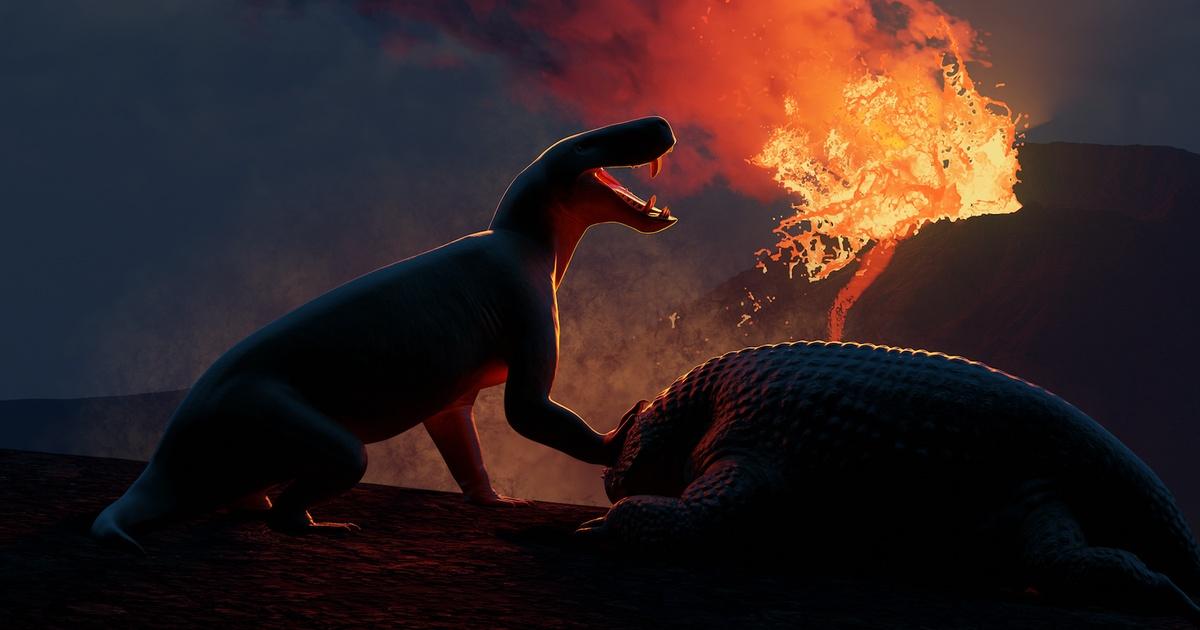
The Permian is a critical period in the evolution of life, marking the evolution of the two groups of land vertebrates that dominate to this day: synapsids (which includes modern mammals like us) and sauropsids (which includes crocodilian, reptiles like lizards, snakes and turtles, and dinosaurs and birds). It is defined as the period from c. 299 million years ago to the "Great Dying" mass extinction c. 252 million years ago. It is also the period when all the major land masses on Earth formed a single huge continent known that we call Pangaea, Greek for "all land", hence the choice of subtitle.
Episode 1 of the series starts in the late Carboniferous, the period before the Permian, focusing on two key adaptations that drove evolution from that time forward: the development of seeds in plants (previously, plants reproduced with spores) and the development of amniotes, vertebrate animals capable of laying eggs on land (previous vertebrates like fish and amphibians had to lay eggs in water). That sets the stage for the evolution of the two groups of amniote vertebrates I mentioned above, synapsids and sauropsids.
Here is part 1, which is available from both Eons' YouTube channel and pbs.org:
And a clip from Part 2 on PBS's YouTube channel, which deals with the pelycosaurs, synapsids who dominated the first part of the Permian. They included the famed predator Dimetrodon, often mistaken for a dinosaur due to its size and appearance but actually more closely related to modern mammals than to the dinosaurs.
And finally, the series page on PBS's website, where you can watch the 2nd and later episodes as they are released. They opened with 1 & 2 this week and the rest will be released weekly going forward.
The Permian is a critical period in the evolution of life, marking the evolution of the two groups of land vertebrates that dominate to this day: synapsids (which includes modern mammals like us) and sauropsids (which includes crocodilian, reptiles like lizards, snakes and turtles, and dinosaurs and birds). It is defined as the period from c. 299 million years ago to the "Great Dying" mass extinction c. 252 million years ago. It is also the period when all the major land masses on Earth formed a single huge continent known that we call Pangaea, Greek for "all land", hence the choice of subtitle.
Episode 1 of the series starts in the late Carboniferous, the period before the Permian, focusing on two key adaptations that drove evolution from that time forward: the development of seeds in plants (previously, plants reproduced with spores) and the development of amniotes, vertebrate animals capable of laying eggs on land (previous vertebrates like fish and amphibians had to lay eggs in water). That sets the stage for the evolution of the two groups of amniote vertebrates I mentioned above, synapsids and sauropsids.
Here is part 1, which is available from both Eons' YouTube channel and pbs.org:
And a clip from Part 2 on PBS's YouTube channel, which deals with the pelycosaurs, synapsids who dominated the first part of the Permian. They included the famed predator Dimetrodon, often mistaken for a dinosaur due to its size and appearance but actually more closely related to modern mammals than to the dinosaurs.
And finally, the series page on PBS's website, where you can watch the 2nd and later episodes as they are released. They opened with 1 & 2 this week and the rest will be released weekly going forward.
Last edited: