Questions Seeking Answers

Welcome to Wondercafe2!

A community where we discuss, share, and have some fun together. Join today and become a part of it!

That will work on some people. Just be sure you know your audience before using that one.

I don't personally understand how you square that belief in an all-powerful and good deity with cruel realities, and it's never been explained to me in a way that is anything resembling a coherent argument, but that's for each person to decide.
When I look at cruelty, disease, loss and injustice, chansen, my first reaction's grief.

For me, faith's based on Christ's person. Christianity teaches that God entered suffering. Jesus was betrayed. Abandoned. Tortured! KILLED!

So when I see the world's brokeness, I see the thing I believe God came to confront and bear alongside us.

For me, suffering's existence makes a suffering Saviour meaningful
 
I've always liked the process approach myself. God's power isn't to change the world unilaterally, but to change the hearts of people to get them to change the world. God does this through lures, things that inspire us to do better and be better. So God's approach to disease isn't to miraculously make it all go away, it's to inspire compassionate, caring health professionals to care for those suffering and scientists to try to mitigate or eliminate disease through things like cures and vaccines. Why this limit on God's power? God wants free, loving people living in relationship with God and the universe, not robots controlled by God's every whim. God wants us to choose to be better, to choose to make a better world, not just shove it down our throats. Christ is a lure, but not the only one. In the end, anything that brings us closer to a caring, compassionate effort to make a better world pleases God, not believing the right thing or following the right religion.

And that's enough heresy for this thread today, I guess. :giggle:
 
Jae, you assume some guy is in charge. You say this guy made sure some savior, who may or may not be this guy as well, suffered/died/slept off a long weekend. This suffering, being a 3 day ordeal, is somehow comforting to those who experience loss. Some losses being catastrophic and young or before their time.

How is any of the above believable or comforting?

Unsafe suggests this is in retribution or a form of warning for people not believing "properly," which I think most here would agree is asinine and evil. Maybe you do as well, though your theological positions seem to shift depending on who you are looking to provoke on a given day, or, to be charitable, perhaps simply which religious leader you spoke to last.

I don't respond to you or unsafe often anymore. I've finally come to the understanding that there is little point. Except that every now and then, in case someone new pokes around, there should be a voice that points out that these beliefs are untenable at best and become disgusting as they move toward what unsafe insists.
 
Why suffering exists

From google

We Live in A Fallen World: Scripture explains that suffering entered the human experience because of sin and rebellion in a broken world (Romans 5:12)

read all yourselves I just posted part of the Article here


2. Natural Disasters are a Foretaste of Judgement​

Natural disasters are always a foretaste of what the final judgment will be like. They are a picture, a portrait, and a preview of what is to come upon those who do not find refuge in the only Saviour, Jesus Christ (2 Peter 2:5-6).

Both the floods and the fires of Genesis were a foretaste of God’s eternal judgment— warnings of what must come again to a world that reject God’s salvation
(Matt 24:37-38; 2 Pet 3:5-7). Jesus describes disasters, including wars, famines, and earthquakes as “the beginning of the birth pains” as we wait for His return (Mark 13:8).

The writer of Revelation sees such catastrophic events as the beginnings of God’s wrath (Rev 6:1-17).

Far from proceeding from a harsh and malevolent God, natural disasters are a reminder that God’s forgiveness and grace are still available to those who repent and believe.

After all, because natural disasters are a shadow of Judgment Day, God uses them to compel us to trust in Him before it’s too late.

3. Natural Disasters are God’s Call to Repent​

In the West, we are prone to succumb to the illusion that we are the masters of our fates and the captains of our souls.

Natural disasters are a sobering wake-up call that nothing could be further from the truth.


As C.S. Lewis writes in The Problem of Pain:

God whispers to us in our pleasures, speaks in our conscience, but shouts in our pain: it is His megaphone to rouse a deaf world.[1]

Each time a calamity strikes, we are reminded of the glorious truth that God is in control, and we are not.

When God strips away our security and comfort, we recognise just how fragile our lives are.

Yet, God does not do this arbitrarily.

He does it to alarm us of our need to repent of our sin and trust in Him.


Jesus gets to the heart of our issue—our own heart.

Our response to disasters shouldn’t be to try to work out the specifics of who’s to blame. Rather we should see all disasters as reminders of own feeble estate and humbly acknowledge Jesus Christ as our only Saviour.
Natural disasters remind us that we are living in a fallen world; that we ourselves are mortal, and that there is a greater judgment to come. By God’s grace,

He allows these tragic events to afflict our world so that we would recognise our desperate need for salvation.
 
Why suffering exists

From google

We Live in A Fallen World: Scripture explains that suffering entered the human experience because of sin and rebellion in a broken world (Romans 5:12)

read all yourselves I just posted part of the Article here


2. Natural Disasters are a Foretaste of Judgement​

Natural disasters are always a foretaste of what the final judgment will be like. They are a picture, a portrait, and a preview of what is to come upon those who do not find refuge in the only Saviour, Jesus Christ (2 Peter 2:5-6).

Both the floods and the fires of Genesis were a foretaste of God’s eternal judgment— warnings of what must come again to a world that reject God’s salvation
(Matt 24:37-38; 2 Pet 3:5-7). Jesus describes disasters, including wars, famines, and earthquakes as “the beginning of the birth pains” as we wait for His return (Mark 13:8).

The writer of Revelation sees such catastrophic events as the beginnings of God’s wrath (Rev 6:1-17).

Far from proceeding from a harsh and malevolent God, natural disasters are a reminder that God’s forgiveness and grace are still available to those who repent and believe.

After all, because natural disasters are a shadow of Judgment Day, God uses them to compel us to trust in Him before it’s too late.


3. Natural Disasters are God’s Call to Repent​

In the West, we are prone to succumb to the illusion that we are the masters of our fates and the captains of our souls.

Natural disasters are a sobering wake-up call that nothing could be further from the truth.


As C.S. Lewis writes in The Problem of Pain:

God whispers to us in our pleasures, speaks in our conscience, but shouts in our pain: it is His megaphone to rouse a deaf world.
[1]

Each time a calamity strikes, we are reminded of the glorious truth that God is in control, and we are not.

When God strips away our security and comfort, we recognise just how fragile our lives are.

Yet, God does not do this arbitrarily.

He does it to alarm us of our need to repent of our sin and trust in Him.


Jesus gets to the heart of our issue—our own heart.

Our response to disasters shouldn’t be to try to work out the specifics of who’s to blame. Rather we should see all disasters as reminders of own feeble estate and humbly acknowledge Jesus Christ as our only Saviour.
Natural disasters remind us that we are living in a fallen world; that we ourselves are mortal, and that there is a greater judgment to come. By God’s grace,

He allows these tragic events to afflict our world so that we would recognise our desperate need for salvation.

If Christ is the light ... how could we continue to live in the dark unless as a mystery ... and then that may be true given what some of us know ... and yet othere will claim to know it all which has got to be satire, satyr, parrable or some other far-fetched truth that isn't as it appears.

Then in the darkness of it all I doubt whether any of us will get out of where we are alive because it seems we wouldn't want to, given what we do and call truth.

Of course, given we live in folly there has to be a source for it as up there being logical as folly goes! Some spell it as fallacy and thus it overcomes ... as a manifestation ...
 
Natural disasters remind us that we are living in a fallen world; that we ourselves are mortal, and that there is a greater judgment to come. By God’s grace,
Natural disaster are *natural*. They are a reminder that we live on a cooling planet with shifting tectonic plates and orbit a sun that sets a water cycle in motion in an atmosphere that sometimes gets all swirly.

We know all this, so to point to your "God" being all pissed with us for some random reason just shows how utterly stupid and gullible you are. You really should be ashamed, but you're not capable of that.
 
Here is one for you all -----

Do Non Believers call out to God in a crisis or when Disaster strikes -----

According to this definitely some do ------Surprise you ??????


This article is more than 8 years old

Non-believers turn to prayer in a crisis, poll finds​


For many non-believers, it is an instinctive response to a crisis: “Please, God.” So perhaps it should not be surprising that a new survey has found that one in five adults pray despite saying they are not religious.

Among the non-religious, personal crisis or tragedy is the most common reason for praying, with one in four saying they pray to gain comfort or feel less lonely.
 
Do you suppose with people that deny intellect, knowledge and wisdom can be cognizant of thoughts as they manifest?

Thus some that have denied should be careful of going against some thoughts about lava cooling and forming earth and other such dirt that acts as a carrier for such mire things that become missals ... and yet the people are mostly unable to kknow it ... because of implications about know-how!

Imagine the earth ripping through the darkness at night ... relentlessly and without destination because of nothing being out there ...

That's the way nothing is! If you've ever looked into the mystery of it all ... that's everything! Further more we don't know a lot ... regardless of the claims if the piously fixated about the hard nut we ride upon ...
 
Among the non-religious, personal crisis or tragedy is the most common reason for praying, with one in four saying they pray to gain comfort or feel less lonely.
But here is the thing -----I believe God hears the cries of the Unrighteous ---but answering their cry needs to be studied -----

This Folks is not taught in mainstream Churches -----this is one of those forbidden and Harsh Teaching that is buried and never talked about ----as it is mostly preached that God hears and answers all peoples Prayers -----believers and unbelievers --Well there is a little more to it than that --

What does the Scripture say about God answering the unbelievers prayers -----

People in the Pews need to be fed God's Truth not Human Truth------


Prayers of the Unrighteous

Topical Encyclopedia

The concept of the prayers of the unrighteous is a significant theme in the Bible, reflecting the relationship between human sinfulness and divine response.

The Scriptures provide insight into how God perceives and responds to the prayers of those who are not in right standing with Him.

Biblical Perspective

The Bible often contrasts the prayers of the righteous with those of the unrighteous.

In Proverbs 15:29, it is stated, "The LORD is far from the wicked, but He hears the prayer of the righteous."

This verse highlights the distance between God and the wicked, suggesting that their prayers may not reach Him in the same way as those of the righteous.

Similarly, Isaiah 59:2 emphasizes the barrier that sin creates between God and humanity:

"But your iniquities have separated you from your God; your sins have hidden His face from you, so that He will not hear."

This passage underscores the idea that unrepentant sin can hinder communication with God.

Conditions for Answered Prayer

The Bible outlines certain conditions under which prayers are more likely to be heard and answered by God.

One key condition is repentance. In 2 Chronicles 7:14, God promises, "If My people who are called by My name humble themselves and pray and seek My face and turn from their wicked ways, then I will hear from heaven, forgive their sin, and heal their land."

This verse indicates that a humble and repentant heart is crucial for effective prayer.

Additionally, James 5:16 states, "The prayer of a righteous man has great power to prevail."

This suggests that righteousness, characterized by a life aligned with God's will, enhances the efficacy of prayer.

Examples of Unrighteous Prayers

The Bible provides examples of prayers offered by those considered unrighteous.

In Luke 18:10-14, Jesus tells the parable of the Pharisee and the tax collector.

The Pharisee's prayer is self-righteous and prideful, while the tax collector's prayer is humble and penitent.
Jesus commends the tax collector, illustrating that God values humility and repentance over self-righteousness.

Another example is found in the account of Cain in Genesis 4.

After murdering his brother Abel, Cain laments his punishment rather than expressing genuine remorse.

His interaction with God reflects a lack of true repentance, and his "prayer" is not met with favor.

God's Sovereignty and Mercy


Despite the general principle that sin hinders prayer, the Bible also reveals God's sovereignty and mercy.

In Jonah 3, the people of Nineveh, known for their wickedness, repent at Jonah's preaching.

Their prayers and fasting reach God, who relents from sending disaster.

This account demonstrates that God is willing to hear and respond to the prayers of the unrighteous when they turn from their sins and seek Him earnestly.


Conclusion


The prayers of the unrighteous, as depicted in the Bible, serve as a reminder of the importance of a contrite heart and a life aligned with God's will.

While sin can create a barrier to effective prayer,

God's mercy and willingness to forgive offer hope to those who seek Him with sincerity and repentance.


I say ------Good Sermon that all Ministers should be Preaching often to their Church ---- :angel:
 
Among the non-religious, personal crisis or tragedy is the most common reason for praying, with one in four saying they pray to gain comfort or feel less lonely.
I was asked this once. It might be on this site or the old one. I'm off to find it.


so may i ask, in one of your darkest trying moments in your life where knowing its not in your control or in any other professional , did you not, not even for a moment in your heart look to some external hope in that He might be if He could only intervene in your situation, if even for a moment

never?

Blackbelt, let me be completely serious for a moment. This is hard for me.

When my son wasn't breathing, on two occasions in 2012, I never once thought about God. Why would I? I'm well aware of the concept, but it is completely and utterly unbelievable to me. It does not, and did not on those nights, occur to me to pray. CPR? Yes. Pray? No.

We know Christians lie about deathbed conversions, so I just assume they lie about others praying in the face of crisis or tragedy.

I do not think about your God in times of crisis. I can now say this with absolute certainty. I was not brought up with religion.

If someone was brought up with religion, as most are, I can see subconsciously reverting to thinking there is a being you can petition to when all else is lost. I never had that. If I go down, I go down swinging, not praying. And I can guarantee you of that.
 
Ever meet a real nasty Christian that makes you wonder how they feel so good about themselves?

It is why I ask many critical questions of myself ... it may seem like a prayer to a rigid type ... or any other beastie carved in stone ... inside me is this god-like emotion that can react without a clue ... and thus must be kept down and subtle!

Over the horizon eh?
 
I feel like I've had that experience very recently....

I grew up in that kind of atmosphere ... it was like a sour wind or bad Eire as LGK used to say ... God is like the wind and can fan bad fires! It calls for dunking, dipping and other catharsis ... to quench it! The implications have some bad inclinations as in a bucket list ... running off into the hills? Moses did that in legends ... it may be indication of something other ...
 
Why are there so many religions if one is true?

The variety of religions reflects both humanity's desire to reach God and the different cultures, histories and EXPERIENCES people have.

If God created us with free will, it's not surprising that people come to different conclusions about spiritual questions.

I tend to ask which religion best explains reality and points to truth.

I respect that others are asking that question sincerely too
 
There are no good people -----God is the only one Good -----

When Believers suffer they can remain Joyful ----as they suffer for Christ's sake -----

Jesus warns that believers will suffer but not to loose heart ---as he suffered first ---

Answered that all ready ----All wealth comes from God -----So God allows the wicked to prosper but gives a warning about storing up money ----and laying themselves out for the slaughter later -----

View attachment 12767
As Paul writes, "we rejoice in our sufferings" because God's at work in us through them (Rom 5:3-5).

I agree, unsafe, that everything we have ultimately comes from God.

Scripture warns us not to place our trust in riches. Whatever we fear, love and TRUST above all things becomes our god.

A comforting reminder's Eph 2:8-9, "For by grace you've been saved through faith." Whether in suffering or prosperity, unsafe, our hope's in Christ ✝️
 
And on a day off there (Sabbath) god looked down and said it was good ... the produce disagreed as usual for simpler and younger gods don't have the experience to know when it is time to get out ... it's beyond their wills (usually to be boss). This occurs about 'ave of the time ... thus 'ave 'eart issue ... few ear't ove it ... overcome by the silence ... the depth of night nautch ... a slot in time? Thus those white an' black barred things ... Ze Bras? Like kind 've mulish ...

A bit off about the Job thing ... bit difficult? Chew harder ... be eschewed ... not barefoot ... there's a myth about that also on immersion ... and getting right around it ... the thing simulating ET hic ... upstanding A'? Patches with open arms ... drawing Job ... reproduction myths ... dis-tortions?

Peter ran off with it ... the Pi ... it had 2 legs and nothing higher up ... resolution? Something required tabling ...
 
Last edited:
I tend to ask which religion best explains reality and points to truth.
No man made Religions points to the Real Spiritual Truth of the Scripture ---- only the indwelling Holy Spirit can do that ------

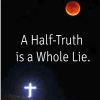
Most Man Made Religions give you Half truths of the word which is a lie -------

Google has it

A half-truth presented as the whole truth functions as a complete deception.

Intentional Omission: Leaving out vital facts or context creates a false impression to manipulate understanding. Biblical Precedent: Scripture shows that distortion often starts by mixing partial truth with error, such as the serpent's approach in Genesis. Theological Standard: God commands complete honesty and integrity, meaning deceptive technicalities or out-of-context verses fail His standard of truth.
 

Attachments

  • 1790853018927.png
    1790853018927.png
    165.3 KB · Views: 0
Back
Top