Not James?John is the first of the original twelve disciples to be martyred.
Acts makes no mention of any move to replace him (as we saw with Judas and Matthias).


Navigation
Install the app
How to install the app on iOS
Follow along with the video below to see how to install our site as a web app on your home screen.
Note: This feature may not be available in some browsers.
More options
You are using an out of date browser. It may not display this or other websites correctly.
You should upgrade or use an alternative browser.
You should upgrade or use an alternative browser.
Snoopy Approaches Acts
- Thread starter paradox3
- Start date
- Status
- Not open for further replies.
More options
Who Replied?
paradox3
Peanuts Fan
- Pronouns
- She/Her/Her
Thanks for that explanation of the twelve seats @unsafe. Makes sense.
I guess I was thinking more of the contingent of disciples needed to do the work in the early church.
But of course they appointed deacons when they needed them. And they acquired Paul and others who assisted in the new movement.
I guess I was thinking more of the contingent of disciples needed to do the work in the early church.
But of course they appointed deacons when they needed them. And they acquired Paul and others who assisted in the new movement.
paradox3
Peanuts Fan
- Pronouns
- She/Her/Her
Acts 12:18-25

 www.biblegateway.com
There is great consternation among the soldiers about what happened to Peter. Herod questions the two guards who were with him and has them executed.
www.biblegateway.com
There is great consternation among the soldiers about what happened to Peter. Herod questions the two guards who were with him and has them executed.
Herod goes to Caesarea and stays there.
He has conflict with the people of Tyre and Sidon and gives no glory to God. An angel of the Lord strikes him down. He is eaten by worms and dies.
The word of God keeps on spreading.
Barnabas & Saul return to Jerusalem and they take John Mark with them.
Bible Gateway passage: Acts 12:18-25 - New English Translation
At daybreak there was great consternation among the soldiers over what had become of Peter. When Herod had searched for him and did not find him, he questioned the guards and commanded that they be led away to execution. Then Herod went down from Judea to Caesarea and stayed there. Now Herod was...
Herod goes to Caesarea and stays there.
He has conflict with the people of Tyre and Sidon and gives no glory to God. An angel of the Lord strikes him down. He is eaten by worms and dies.
The word of God keeps on spreading.
Barnabas & Saul return to Jerusalem and they take John Mark with them.


Mendalla
Happy headbanging ape!!
- Pronouns
- He/Him/His
There's a movie for that!Death by worms today!
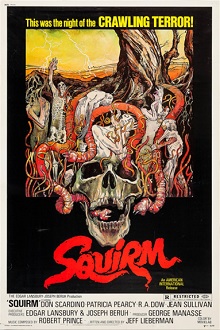
Okay, not really, but phrase "death by worms" called it to mind.
Interesting how poor Herod (it was Herod Agrippa I most likely given the timing) kind of skipped straight to the eaten by worms part. That usually comes after you're in the grave. He really pissed off God, it appears.
The Wiki article on Herod Agrippa says that he suffered stomach pains and then died after 5 days. It did, in fact, happen after the whole people comparing him to a god thing, which happened at a games in Caesarea Maxima, his capital at the time. Apparently, he did nothing to dissuade them so people believed God struck him down, with that becoming the basis for the version of the story in Acts. It has been suggested by classical scholars that he was actually poisoned by Romans worried about his political ambitions. Obviously, some unidentified and now unidentifiable health issues could be involved as well.

unsafe
Well-Known Member
So we see today ---that there was great stir among the Guards as to the wear a bouts of Peter ---Herod was furious as his prized possession was no where to be found -----
If you do some research you find that in those days it was customary that if a prisoner escaped --the guards looking out for that prisoner were doomed to take the place of the prisoner and so the guards were executed -----
Glad I didn't live in those days ------
So in the last section here we see God's judgment upon Herod and God Blessing the Church
The people of Tyre and Sidon were anger at Herod and so they went to meet with him to try and make peace as their food supply came from his country ------
Herod like to please the people cause he like the praise and applause --so he dressed in royal cloths to make a good impression and sat on a throne to speak to the people
Herod got what he wanted--- big praises ----- the people shouted
. 22, “It is the voice of a god and not of a man!”
Well that did not impress God at all -----and God placed a hefty gruesome penalty on Herod ----Herod took what belongs to God ---Praise and thanksgiving ----Herod wanted and took all the glory for himself ----and all the Glory belonged to God not him -----
The way Herod died reflected his nature ----he was corrupt from the --Inside to the Outside --so his judgment came swift and sudden --
The angel of the Lord struck him down with some kind of wasting disease ?
verse 23 AMP ---------he was eaten by worms and died [five days later]
AI Overview
The historical sources and medical diagnoses of King Herod the Great's death include descriptions of visible worms or maggots in his gangrenous genital area, which was likely a complication of chronic kidney disease and Fournier's gangrene. The account by Flavius Josephus, based on contemporary reports, describes putrefaction and visible worms in the genital area, alongside other severe symptoms.
Don't think poor Herod made to to Heaven folks ------Worms describes Hell to -----so Herod is getting a double dose of worms --I say ----

From Strong's concordance
Greek word for worm
Lexical Summary
skóléx: Worm ,a grub, maggot or earth-worm
a worm specifically, that kind which preys upon dead bodies by a figure borrowed from Isaiah 66:24 'their punishment after death will never cease' (σκώληξ symbolizing perhaps the loathsomeness of the penalty), Mark 9:44,
The phrase originates in Isaiah 66:24, where rebellious people meet a ghastly end:
“Their worm will not die, and their fire will not be quenched”. In Isaiah, the scene unfolds at the close of history, outside the New Jerusalem, depicting perpetual disgrace rather than simple annihilation.
Biblical Context: Mark 9:42–50
Within Mark 9 Jesus exhorts His disciples to radical holiness. Using graphic contrasts, He teaches that nothing—not even a hand, foot, or eye—should be spared if it causes sin.
The repeated clause “where their worm does not die and the fire is not quenched” (Mark 9:48) intensifies the warning.
On The Bright Side
God's word is spreading and increasing in effectiveness -----
Barnabas and Saul came back from Jerusalem bringing with them John who is called Mark -----
If you do some research you find that in those days it was customary that if a prisoner escaped --the guards looking out for that prisoner were doomed to take the place of the prisoner and so the guards were executed -----
Glad I didn't live in those days ------
So in the last section here we see God's judgment upon Herod and God Blessing the Church
The people of Tyre and Sidon were anger at Herod and so they went to meet with him to try and make peace as their food supply came from his country ------
Herod like to please the people cause he like the praise and applause --so he dressed in royal cloths to make a good impression and sat on a throne to speak to the people
Herod got what he wanted--- big praises ----- the people shouted
. 22, “It is the voice of a god and not of a man!”
Well that did not impress God at all -----and God placed a hefty gruesome penalty on Herod ----Herod took what belongs to God ---Praise and thanksgiving ----Herod wanted and took all the glory for himself ----and all the Glory belonged to God not him -----
The way Herod died reflected his nature ----he was corrupt from the --Inside to the Outside --so his judgment came swift and sudden --
The angel of the Lord struck him down with some kind of wasting disease ?
verse 23 AMP ---------he was eaten by worms and died [five days later]
AI Overview
The historical sources and medical diagnoses of King Herod the Great's death include descriptions of visible worms or maggots in his gangrenous genital area, which was likely a complication of chronic kidney disease and Fournier's gangrene. The account by Flavius Josephus, based on contemporary reports, describes putrefaction and visible worms in the genital area, alongside other severe symptoms.
Don't think poor Herod made to to Heaven folks ------Worms describes Hell to -----so Herod is getting a double dose of worms --I say ----
From Strong's concordance
Greek word for worm
Lexical Summary
skóléx: Worm ,a grub, maggot or earth-worm
a worm specifically, that kind which preys upon dead bodies by a figure borrowed from Isaiah 66:24 'their punishment after death will never cease' (σκώληξ symbolizing perhaps the loathsomeness of the penalty), Mark 9:44,
The phrase originates in Isaiah 66:24, where rebellious people meet a ghastly end:
“Their worm will not die, and their fire will not be quenched”. In Isaiah, the scene unfolds at the close of history, outside the New Jerusalem, depicting perpetual disgrace rather than simple annihilation.
Biblical Context: Mark 9:42–50
Within Mark 9 Jesus exhorts His disciples to radical holiness. Using graphic contrasts, He teaches that nothing—not even a hand, foot, or eye—should be spared if it causes sin.
The repeated clause “where their worm does not die and the fire is not quenched” (Mark 9:48) intensifies the warning.
On The Bright Side
God's word is spreading and increasing in effectiveness -----
Barnabas and Saul came back from Jerusalem bringing with them John who is called Mark -----
unsafe
Well-Known Member
Apparently Josephus describes Herod's death ---found this

 carm.org
The Ancient Jewish historian Josephus, also writing in the first century AD, reported a strikingly similar account of Herod Agrippa’s demise:
Herod Agrippa I and Acts 12: The historical evidence | carm.org
Acts 12 reports that God stuck down Herod Agrippa I while Herod arrogantly received worship from a crowd in Caesarea.
carm.org
The Ancient Jewish historian Josephus, also writing in the first century AD, reported a strikingly similar account of Herod Agrippa’s demise:
“Now when Agrippa had reigned three years over all Judea, he came to the city Cesarea, which was formerly called Strato’s Tower; and there he exhibited shows in honor of Caesar, upon his being informed that there was a certain festival celebrated to make vows for his safety. At which festival a great multitude was gotten together of the principal persons, and such as were of dignity through his province. On the second day of which shows he put on a garment made wholly of silver, and of a contexture truly wonderful, and came into the theater early in the morning; at which time the silver of his garment being illuminated by the fresh reflection of the sun’s rays upon it, shone out after a surprising manner, and was so resplendent as to spread a horror over those that looked intently upon him; and presently his flatterers cried out, one from one place, and another from another, (though not for his good,) that he was a god; and they added, “Be thou merciful to us; for although we have hitherto reverenced thee only as a man, yet shall we henceforth own thee as superior to mortal nature.” Upon this the king did neither rebuke them, nor reject their impious flattery. But as he presently afterward looked up, he saw an owl sitting on a certain rope over his head, and immediately understood that this bird was the messenger of ill tidings, as it had once been the messenger of good tidings to him; and fell into the deepest sorrow. A severe pain also arose in his belly, and began in a most violent manner…And when he had been quite worn out by the pain in his belly for five days, he departed this life,” (Josephus, Antiquities of the Jews, Chapter 19, Chapter 8, Section 2). (Josephus Complete Works (Accessed 2/22/2021).)
Mendalla
Happy headbanging ape!!
- Pronouns
- He/Him/His
One thing to keep in mind about Josephus is that he absolutely freaking hated the whole dynasty, so always take his statements about them with a grain or two of salt. Most likely, some of it is exaggerated. Ancient historians worked to a different set of standards than modern ones, most notably they aren't shy about their biases. Modern ones at least pretend history is objective (even though it rarely is).
unsafe
Well-Known Member
AI on Josephus
one should be skeptical of the historical texts attributed to Flavius Josephus, but not entirely dismissive. While he provides valuable historical details, particularly regarding the Jewish War, there is evidence of Christian scribes interpolating (adding to) his works, most notably the Testimonium Flavianum, which refers to Jesus. Modern scholarship acknowledges these interpolations but also finds that Josephus' original non-Christian accounts often contain historically important details about John the Baptist and Jesus that predate Christian edits.
Reasons for Skepticism
one should be skeptical of the historical texts attributed to Flavius Josephus, but not entirely dismissive. While he provides valuable historical details, particularly regarding the Jewish War, there is evidence of Christian scribes interpolating (adding to) his works, most notably the Testimonium Flavianum, which refers to Jesus. Modern scholarship acknowledges these interpolations but also finds that Josephus' original non-Christian accounts often contain historically important details about John the Baptist and Jesus that predate Christian edits.
Reasons for Skepticism
- Christian Interpolations:
The Testimonium Flavianum (passage 18.63-64 in the Antiquities) contains significant additions that appear to be the work of Christian scribes, as they describe Jesus as the Christ. Josephus himself was a Jewish historian, not a Christian, so such explicit statements are unlikely to be original. - Scholarly Debate:
While the Testimonium Flavianum is generally considered a Christian interpolation, the surrounding context and other parts of Josephus' works are subjects of ongoing scholarly debate regarding their authenticity and degree of Christian influence.
- Authentic Passages Exist:
Even after removing the questionable interpolations, Josephus still offers historically important insights into early Christianity and Jewish history.
- Context of the Intervening Text:
The differences between the original text and the New Testament accounts suggest that any additions were likely made by a Christian scribe who wanted to conform Josephus' writings to the established biblical narrative.
- Value to Historians:
Despite the necessary skepticism regarding Christian additions, Josephus' writings are considered a rich source of information by both historians and humanists.
- Be Aware of Interpolations: Understand that the text has been edited by Christian scribes.
- Examine the Context: Look for discrepancies that might indicate later additions or changes.
- Cross-Reference: Compare passages in Josephus with other ancient sources to get a more complete picture.
paradox3
Peanuts Fan
- Pronouns
- She/Her/Her
Acts 13:1-12

 www.biblegateway.com
The Holy Spirit requests that Saul and Barnabas be set aside for the work to which the Holy Spirit has called them. Hands are placed on them and they are sent off.
Saul and Barnabas sail to Cypress and proclaim the word of God in the synagogues. John Mark assists them.
At Paphos, they find a magician in the company of the proconsul. The proconsul, an intelligent man named Sergius Paulus, summons Barnabas and Saul. He wants to hear the word of God.
The magician, Elymas, opposes them, trying to turn the proconsul away from the faith. Saul (also known as Paul) causes him to be temporarily blind.
The proconsul believes because he was astounded at the teaching about the Lord.
Bible Gateway passage: Acts 13:1-12 - New English Translation
The Church at Antioch Commissions Barnabas and Saul - Now there were these prophets and teachers in the church at Antioch: Barnabas, Simeon called Niger, Lucius the Cyrenian, Manaen (a close friend of Herod the tetrarch from childhood) and Saul. While they were serving the Lord and fasting, the...
The Holy Spirit requests that Saul and Barnabas be set aside for the work to which the Holy Spirit has called them. Hands are placed on them and they are sent off.
Saul and Barnabas sail to Cypress and proclaim the word of God in the synagogues. John Mark assists them.
At Paphos, they find a magician in the company of the proconsul. The proconsul, an intelligent man named Sergius Paulus, summons Barnabas and Saul. He wants to hear the word of God.
The magician, Elymas, opposes them, trying to turn the proconsul away from the faith. Saul (also known as Paul) causes him to be temporarily blind.
The proconsul believes because he was astounded at the teaching about the Lord.
Mendalla
Happy headbanging ape!!
- Pronouns
- He/Him/His
Drawing on his own experiences?Saul (also known as Paul) causes him to be temporarily blind.

paradox3
Peanuts Fan
- Pronouns
- She/Her/Her
In my read-through of Acts, I am encountering more supernatural happenings than I was expecting.Drawing on his own experiences?
Mendalla
Happy headbanging ape!!
- Pronouns
- He/Him/His
The funny thing about Sergius Paulus turning to Jesus is that I really wonder if he was really turning to Jesus as a religious figure or just saw him and the Apostles as more powerful alternatives to Elymas. Obviously, Acts paints it as the former but given the popularity of magic and divination and such in that era, one wonders when you consider the story from an historical lens. Saul's blinding of Elymas would play into that as well (upstaging a rival magician, basically).
unsafe
Well-Known Member
So today we see
The church at Antioch there were prophets [who spoke a new message of God to the people] and teachers:---------- Barnabas, Simeon who was called Niger, Lucius of Cyrene, Manaen------- who had been brought up with]Herod [Antipas] the tetrarch, and Saul.
Info on this Herod
Herod Antipas (Greek: Ἡρῴδης Ἀντίπας, Hērṓidēs Antípas; c. 20 BC – c. 39 AD) was a 1st-century Herodian ruler of Galilee and Perea. He bore the title of tetrarch ("ruler of a quarter") and is referred to as both "Herod the Tetrarch" and "King Herod" in the New Testament.
So while this group was ---Serving the Lord and fasting -----the Holy Spirit gives them a command ----“Set apart for Me Barnabas and Saul (Paul) for the work to which I have called them.”
I say -----This is important here --Folks ------as we see the Holy Spirit has called them to go and preach the gospel -they are not going on their own power or ability ----God is with them and their mission will be successful ------when we try and preach the Gospel on our own power it will not be Spiritually Effective -----
I say ----So Barnabas and Saul are set apart for the mission they were called for ------
The Group----- Notice ----after Praying and fasting ----Lays hands on them -----and they are sent on their way ----
Verse 3 AMP
3 Then after fasting and praying, they laid their hands on them [in approval and dedication] and sent them away [on their first journey].
Notice --they are sent right away ---there was no delay -----in their obedience to God's command ----
So when they get to Salamis, they began to preach the word of God ----That is Faith in Christ --and they brought with them John (Mark) to assist them -----
They travel to Paphos and there meet a False Prophet called Bar-Jesus ----now Bar-Jesus
was close with , Sergius Paulus,who was governor of the province----who is apparently an intelligent and sensible person -----He calls for Barnabas and Saul as he wants to hear the Good News of salvation ---
But here is ----- Elymas the sorcerer (for that is how his name is translated) opposed them, trying to turn the proconsul away from accepting the faith.
I say --------So guess who is interfering here folks -----the one god of this world who's job it is to Keep people from hearing the Gospel ----Satan himself ---
Verses 9 and 10 --speak for themselves ----
9 But Saul, who was also known as Paul, filled with the Holy Spirit and led by Him, looked steadily at Elymas,
10 and said, You [Elymas] who are full of every [kind of] deceit, and every [kind of] fraud, you son of the devil, enemy of everything that is right and good, will you never stop perverting the straight paths of the Lord?
And what Happens the Power of God shows up ---and Bar-Jesus is struck blind for a time ---immediately a mist and Darkness fell upon him and he was grouping around for people to help him -----so now his physical blindness was in sync with his Spiritual blindness---
All sin has consequences and Bar-Jesus' consequence was sever -----in this case
The adversary was ineffective in his quest here ---but in today's world the adversary is very effective in keeping the people of this world away from hearing the Gospel of Salvation cause ---most of the people who occupy the pulpits today are False Prophets themselves--- preaching their own Doctrine to suit what they want it to say -----No Holy Spirit directing them -
and what happened with the Governor ---verse 12 says it
12 The proconsul believed [the message of salvation] when he saw what had happened, being astonished at the teaching concerning the Lord.
The church at Antioch there were prophets [who spoke a new message of God to the people] and teachers:---------- Barnabas, Simeon who was called Niger, Lucius of Cyrene, Manaen------- who had been brought up with]Herod [Antipas] the tetrarch, and Saul.
Info on this Herod
Herod Antipas (Greek: Ἡρῴδης Ἀντίπας, Hērṓidēs Antípas; c. 20 BC – c. 39 AD) was a 1st-century Herodian ruler of Galilee and Perea. He bore the title of tetrarch ("ruler of a quarter") and is referred to as both "Herod the Tetrarch" and "King Herod" in the New Testament.
So while this group was ---Serving the Lord and fasting -----the Holy Spirit gives them a command ----“Set apart for Me Barnabas and Saul (Paul) for the work to which I have called them.”
I say -----This is important here --Folks ------as we see the Holy Spirit has called them to go and preach the gospel -they are not going on their own power or ability ----God is with them and their mission will be successful ------when we try and preach the Gospel on our own power it will not be Spiritually Effective -----
I say ----So Barnabas and Saul are set apart for the mission they were called for ------
The Group----- Notice ----after Praying and fasting ----Lays hands on them -----and they are sent on their way ----
Verse 3 AMP
3 Then after fasting and praying, they laid their hands on them [in approval and dedication] and sent them away [on their first journey].
Notice --they are sent right away ---there was no delay -----in their obedience to God's command ----
So when they get to Salamis, they began to preach the word of God ----That is Faith in Christ --and they brought with them John (Mark) to assist them -----
They travel to Paphos and there meet a False Prophet called Bar-Jesus ----now Bar-Jesus
was close with , Sergius Paulus,who was governor of the province----who is apparently an intelligent and sensible person -----He calls for Barnabas and Saul as he wants to hear the Good News of salvation ---
But here is ----- Elymas the sorcerer (for that is how his name is translated) opposed them, trying to turn the proconsul away from accepting the faith.
I say --------So guess who is interfering here folks -----the one god of this world who's job it is to Keep people from hearing the Gospel ----Satan himself ---
Verses 9 and 10 --speak for themselves ----
9 But Saul, who was also known as Paul, filled with the Holy Spirit and led by Him, looked steadily at Elymas,
10 and said, You [Elymas] who are full of every [kind of] deceit, and every [kind of] fraud, you son of the devil, enemy of everything that is right and good, will you never stop perverting the straight paths of the Lord?
And what Happens the Power of God shows up ---and Bar-Jesus is struck blind for a time ---immediately a mist and Darkness fell upon him and he was grouping around for people to help him -----so now his physical blindness was in sync with his Spiritual blindness---
All sin has consequences and Bar-Jesus' consequence was sever -----in this case
The adversary was ineffective in his quest here ---but in today's world the adversary is very effective in keeping the people of this world away from hearing the Gospel of Salvation cause ---most of the people who occupy the pulpits today are False Prophets themselves--- preaching their own Doctrine to suit what they want it to say -----No Holy Spirit directing them -
and what happened with the Governor ---verse 12 says it
12 The proconsul believed [the message of salvation] when he saw what had happened, being astonished at the teaching concerning the Lord.
unsafe
Well-Known Member
Seriously? Most of the people who occupy pulpits today are False Prophets with no Holy Spirit guiding them???
How did you reach this conclusion?
I am not talking about denominations --I am talking about individuals who go into ministry today who have not the Holy Spirit indwelling in them and are preaching in the pulpits who
preach another Gospel --not the Gospel of Salvation ----which they should be preaching ====
Most ministers today preach on God's love ---The Law and serve your neighbour leaving out ---the 1st Command to love God with all your heart --soul --mind and strength
They preach go to church on Sunday ---pray ---serve in the soup kitchens ---sing in the quire ---etc and your heaven bound ---that is a False Gospel today ----they water down scripture --Preach only half truths which is a lie and and sugar coat the scripture as well never preaching on the hard scripture -and are Preaching the Law --not Grace
AI
Yes, many Christian ministers still preach about the law (referring to the Mosaic Law or Old Testament Law)
- Lack of Truthful Preaching:
Many ministers avoid preaching the full truth of the Bible, especially controversial or challenging parts, preferring to appeal to people's desires for comfort or material benefits, which they see as a sign of spiritual compromise.
Some teachings suggest that the church is infiltrated by "false teachers" or "wolves in sheep's clothing" who hold positions of authority but do not follow Christ
- Genuine Transformation:
A minister's life should show a real change and a commitment to Christ's lordship.
The idea that ministers might "sugarcoat" Scripture or deliver messages that are less challenging, often referred to as watered-down teaching, is a concern .
While Scripture does teach about honoring church leaders and upholding their spiritual guidance, a related concern involves the potential for leaders to avoid difficult or controversial biblical truths, offering only comforting or popular messages instead. This practice can leave congregations without a complete understanding of God's word, failing to challenge them to grow in faith and live according to His will.
Mendalla
Happy headbanging ape!!
- Pronouns
- He/Him/His
Disagreeing with @unsafe does not make one a false prophet or guided by Satan. It merely means you and they do not see eye-to-eye. Only God can judge fairly and justly in these matters, assuming there is one. Your human judgement is as fallible as anyone else's. Debate and discussion are how we try to discern these things and throwing around language like that is merely trying to shut down the discussion by dismissing others' views.
More directly, I see ministers working hard day in and day out to try to help their congregations to a "complete understanding of God's word" (not that that is possible for a human being) by guiding them in their questioning and study, and challenging them "grow in faith and live according to His will" through their sermons and other teaching. That you don't agree with how they are doing it does not invalidate that work. And God will make up God's own mind about it.
More directly, I see ministers working hard day in and day out to try to help their congregations to a "complete understanding of God's word" (not that that is possible for a human being) by guiding them in their questioning and study, and challenging them "grow in faith and live according to His will" through their sermons and other teaching. That you don't agree with how they are doing it does not invalidate that work. And God will make up God's own mind about it.

BetteTheRed
Resident Heretic
- Pronouns
- She/Her/Her
You do know that bar-Jesus means "son of Jesus"? What a curious name for this magician to have?
- Status
- Not open for further replies.